
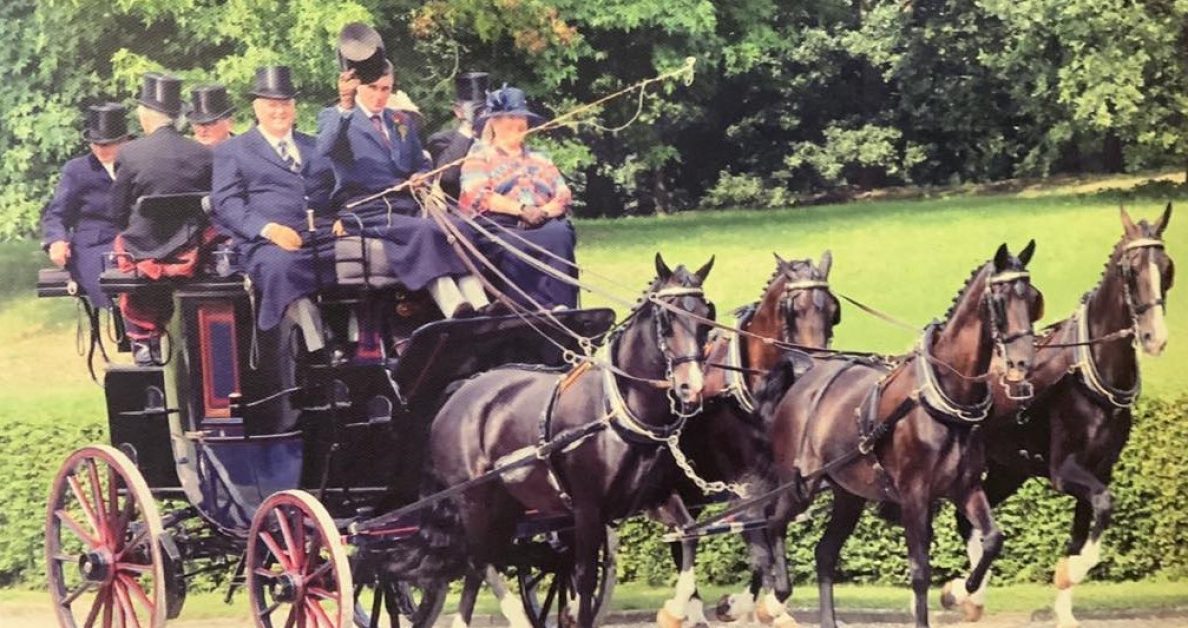
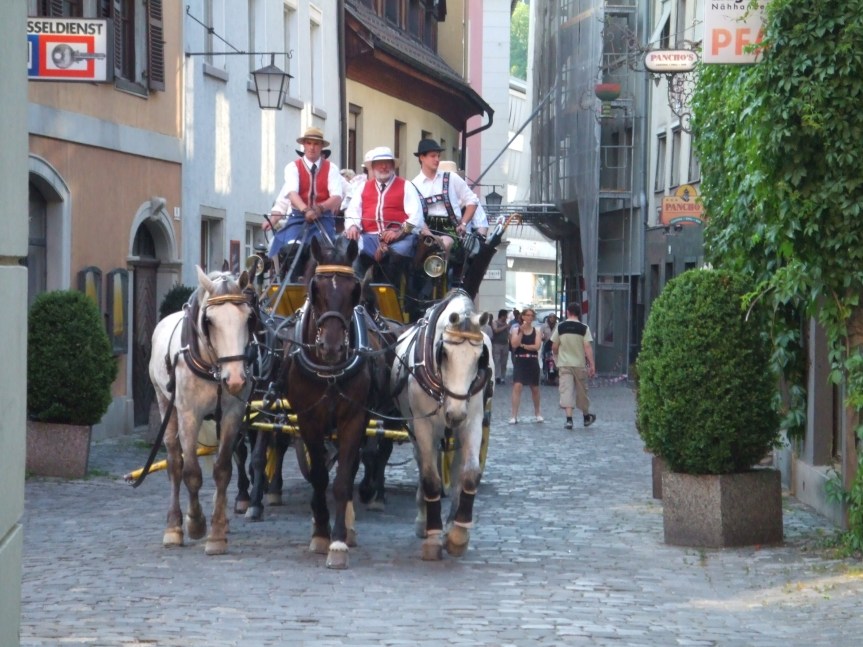
One of the more rarely seen turnouts is a five-in-hand, mountain team or pickaxe as it’s referred to here in the US. The first time I really became aware of the expression “mountain team” was when I was working for Andreas Nemitz of Coaching in Bavaria, who used a five-in-hand to cross the Alps on his nine-day Lindau Messenger tour every year.
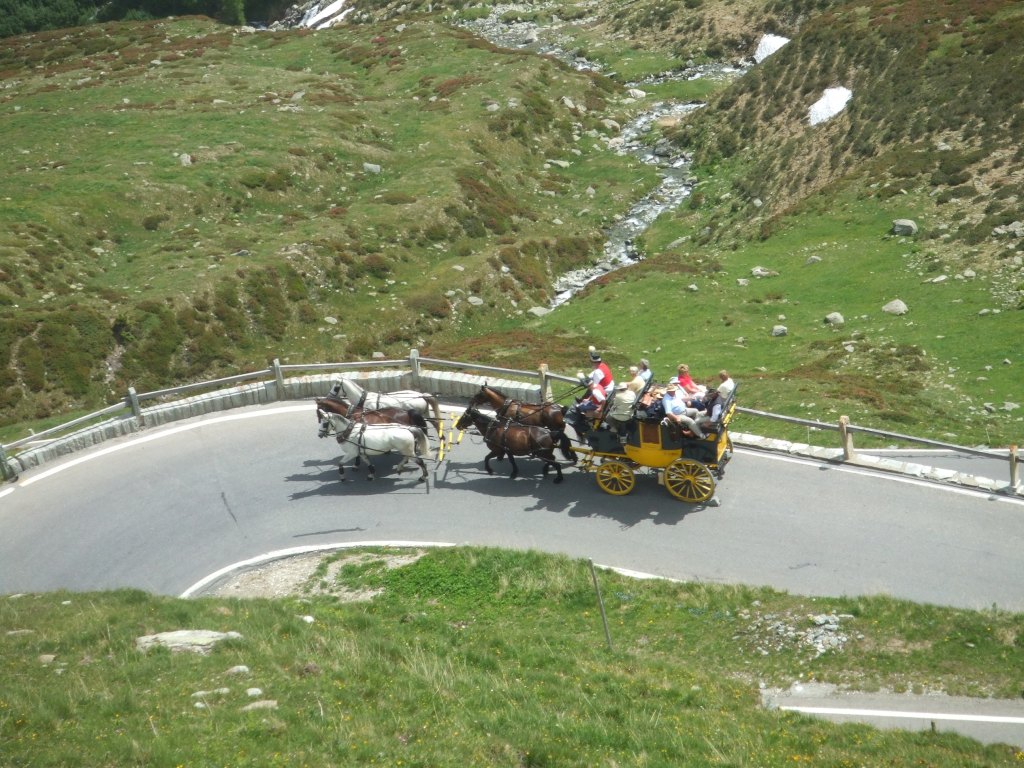
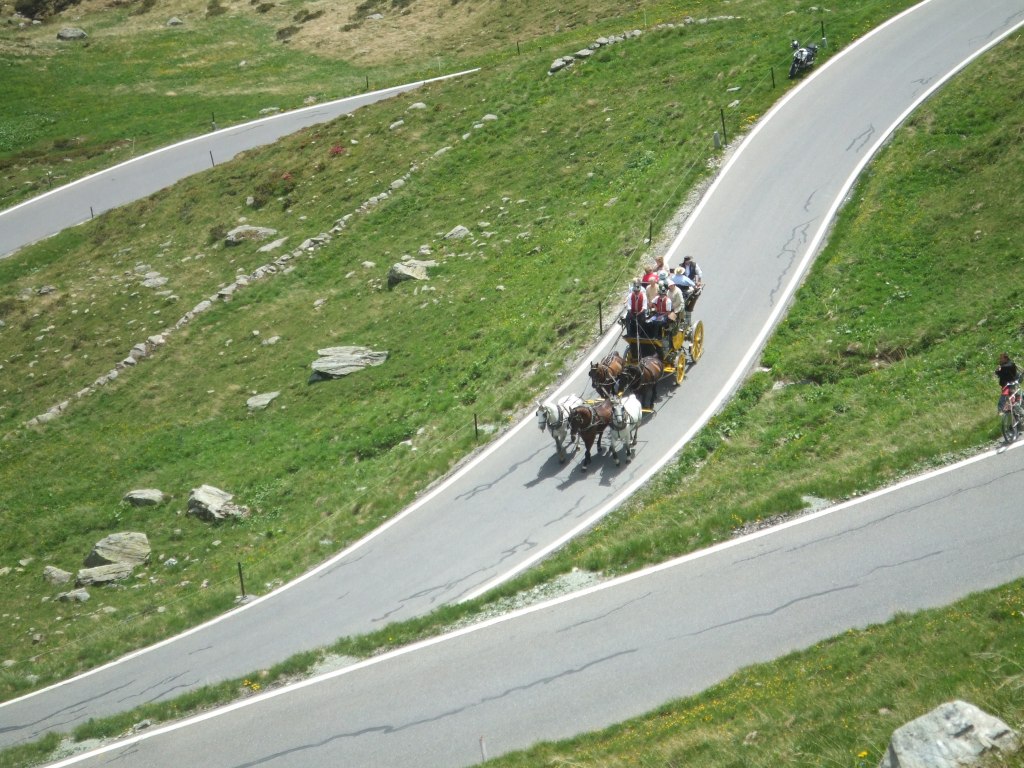
Why five horses instead of four or six? The rule of thumb for working horses, especially in the mountains, is that the weight of the load should equal the weight of the horses. To ensure that we were not overloaded, we used to weigh the horses and coach as we got to the foot of the Alps.
Quite simply, four horses don’t give enough horsepower, but a six-horse team is too long for the tight mountain switchbacks and bends. With a six-in-hand, your leaders would be around the corner before you had any idea what was on the other side. A five-horse team gives you the same length as a four-in-hand, but with extra horsepower. That said, driving a five-in-hand has its challenges!
The five-in-hand has twice as many leader bars as a four-in-hand (six vs. three), so it’s really important that your pole and pole chains are set up correctly. Six leader bars have quite a degree of weight, and if the pole and pole chains are not set up correctly, all this extra weight can end up transferred to the necks of your wheelers.
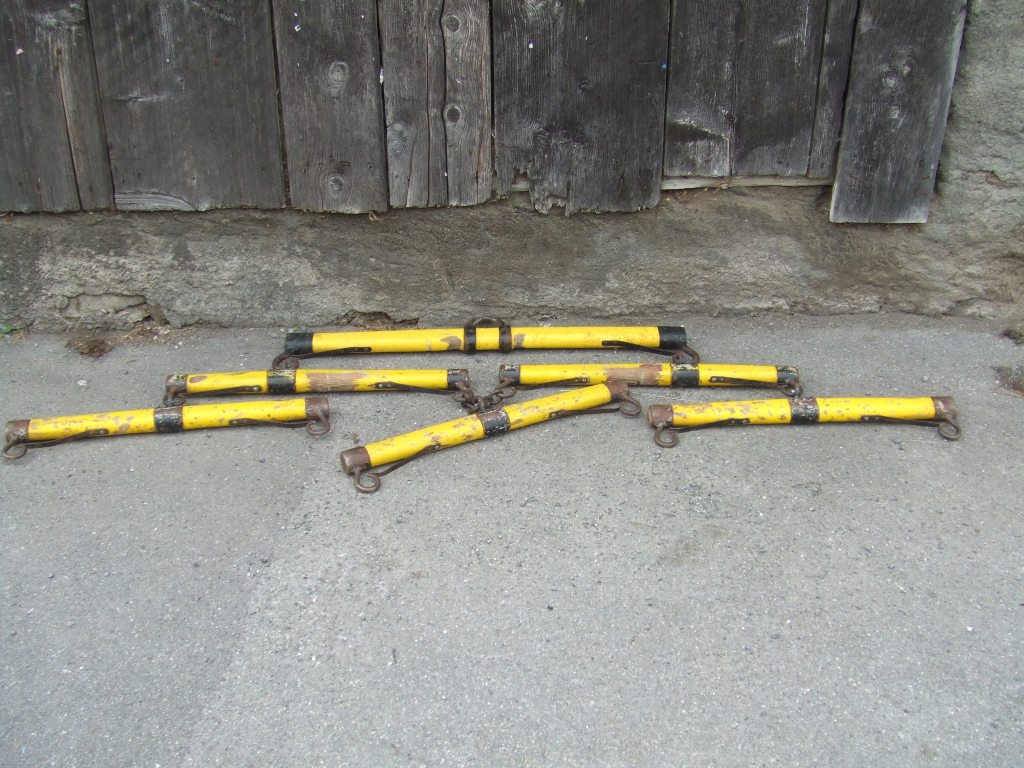
The leader reins of a five-in-hand have two coupling reins to connect all three horses together. When putting to, the pin horse doesn’t have any reins on his harness until you attach the coupling rein to his bridle.
Considering that you have some 20-odd pounds of leather in your hand even before any of your horses start to get strong, the leaders of a five-in-hand need to be light and responsive to drive. The pin horse (the leader in the center) needs to be very forward going, as the five-in-hand configuration makes it nearly impossible to touch the pin horse with your whip.
Another challenge in driving a five-in-hand is the extra power and width of your three leaders, compared to a four-in-hand. The wheelers of your team are very definitely your steering, while the leaders provide the extra power. It’s very important that you balance the workload amongst your team effectively, because if the leaders are allowed to pull through a turn, your wheelers can’t effectively steer your coach, and in fact you can pull the wheelers off their feet if the leaders are doing too much. But when turning while going uphill, there is a split second when all the weight of the coach is resting on the inside wheeler until you can quickly engage the leaders to assist again. Driver awareness and responsiveness is critical in mountain driving!
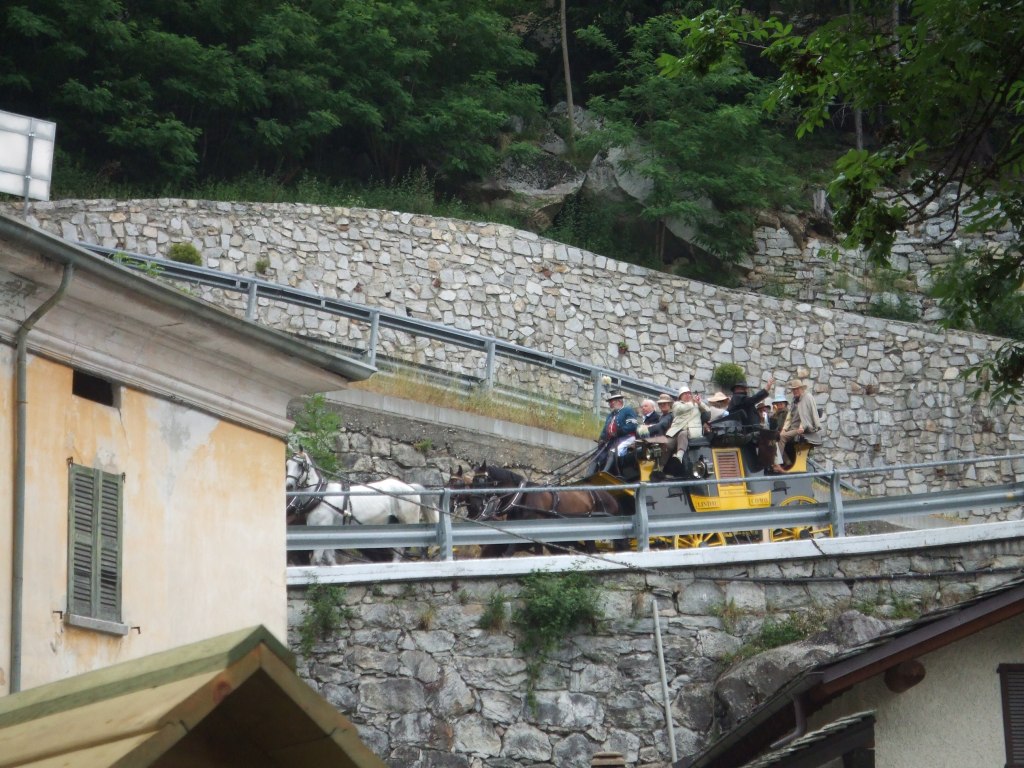
The Lindau Messenger tour was a very challenging nine days of driving every June, starting in Lindau, Germany, passing through Austria, Liechtenstein, and Switzerland, and ending in Como, Italy. The first time I drove through the streets of Feldkirch in Austria was a very nerve-wracking experience, as the leaders seem wider than some of the streets, and as you drive, the umbrella basket touches the plate glass windows! The secret is to have the leaders fully in draft and the wheelers out of draft. This causes the leaders to draw closer together, and fit through the narrow space.
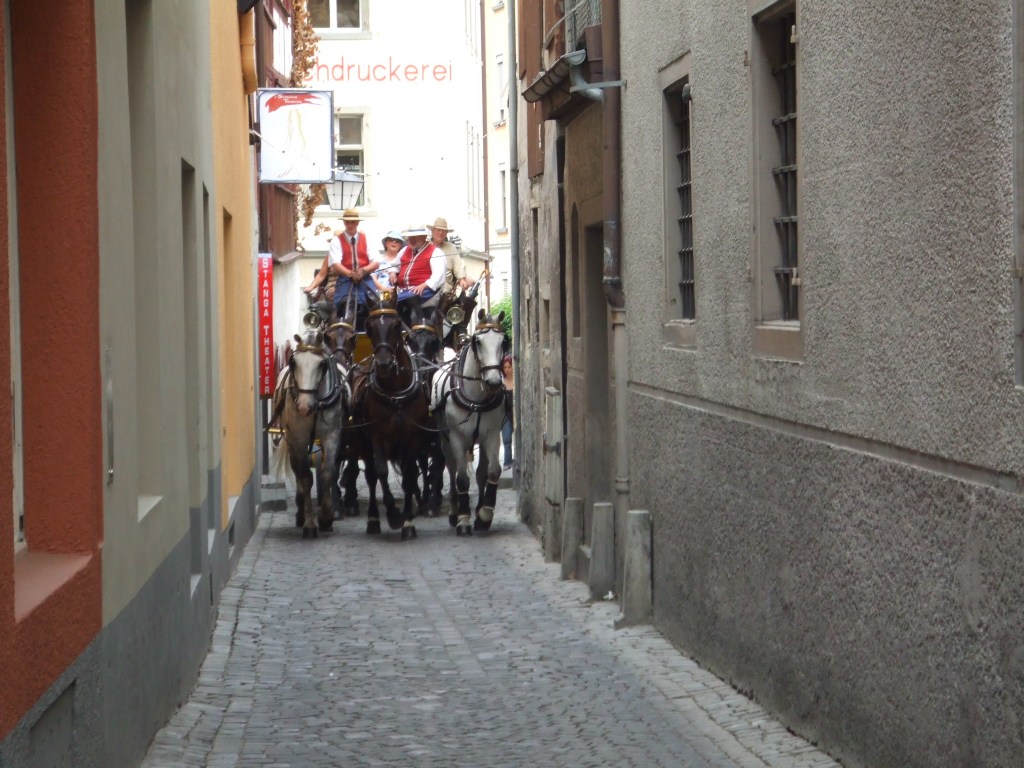
Driving with Andreas Nemitz was like going to a competition every day, although we were really just driving against the terrain and each other. It was a lot of fun as well as an incredible learning experience like no other!
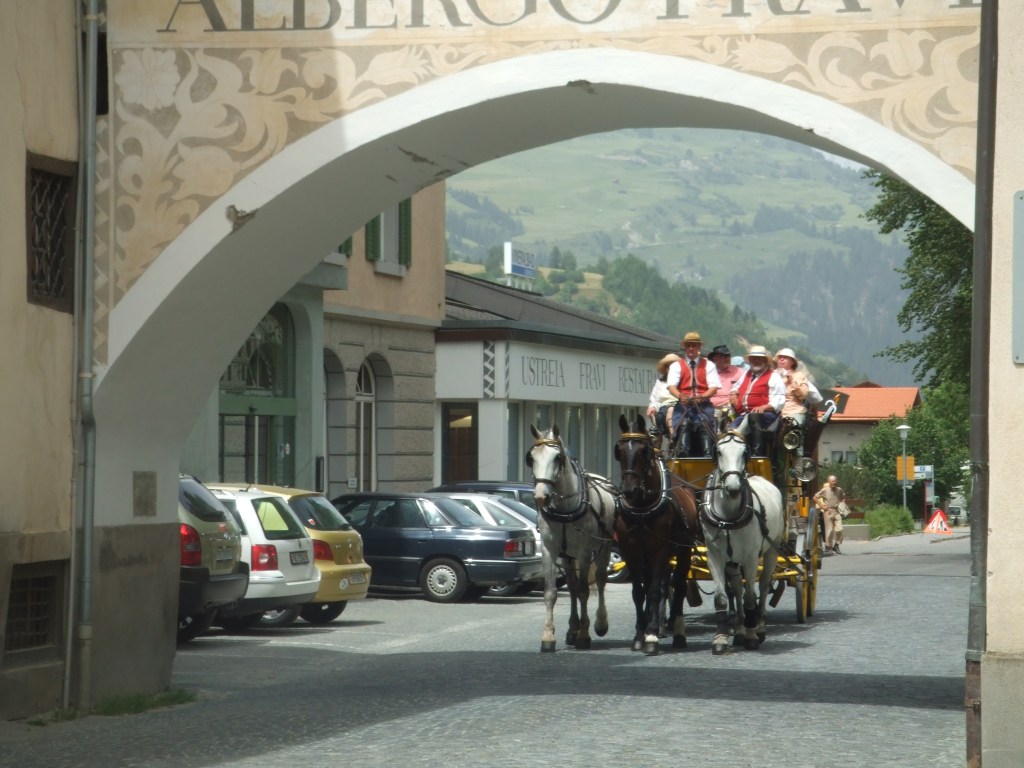
 Ranch Ride Carriage Drive LLC