
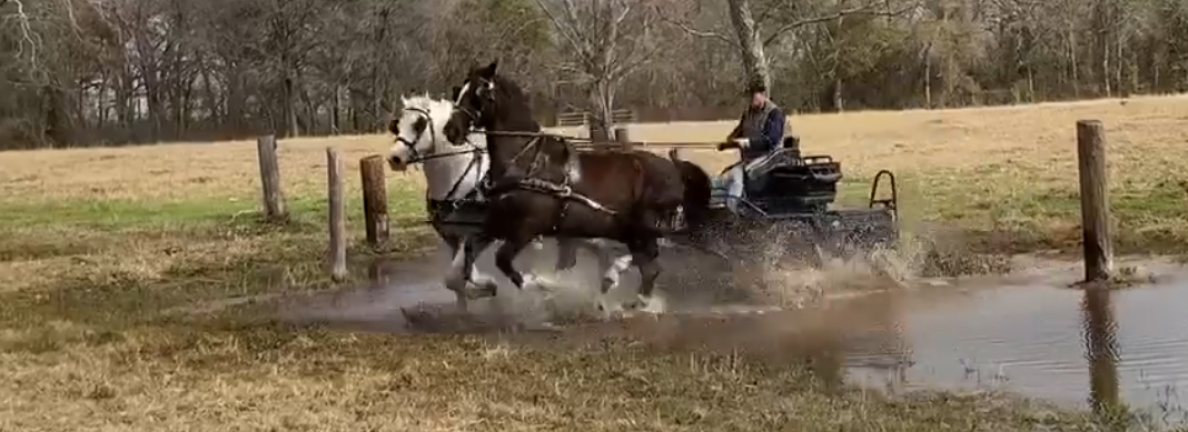
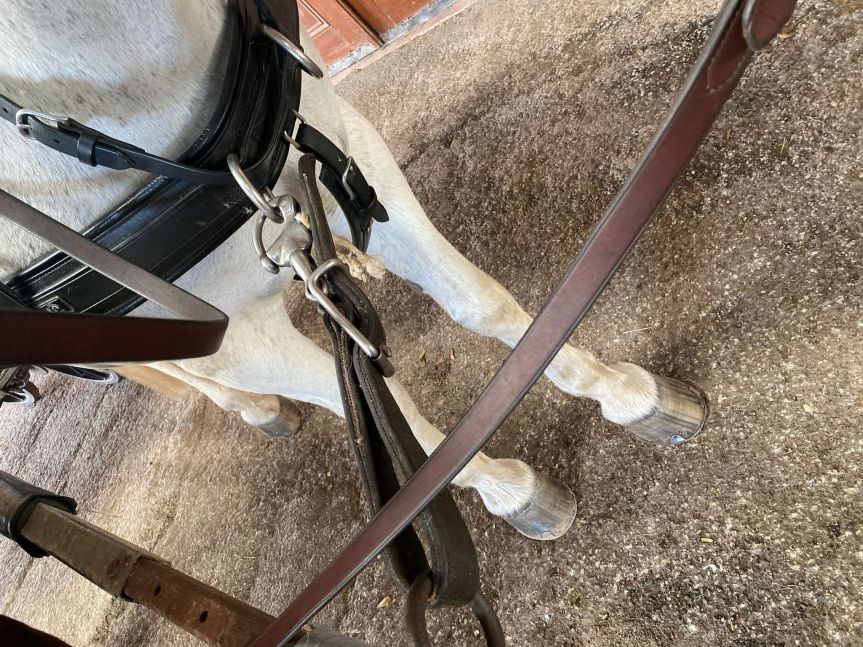
Recently I have been asked several questions about pole straps. In carriage driving, the pole straps connect the horse to the pole, and allow the horses to steer the carriage.
Before we talk about pole straps, let’s ensure that your pole is the correct length for your horses. When measuring a pole, you measure from where the pole attaches to the splinter bar to the tip of the pole head. Below are some sample measurements, but keep in mind, they are just a guide and depend upon the type and style of carriage.
Horse Pole Length
17 HH 115 inches
16 HH 110 inches
15 HH 106 inches
14 HH 99 inches
13 HH 94 inches
12 HH 87 inches
Along with this, you need to ensure that your pole is the correct height. If it’s too low, the horses wind up carrying the weight of the pole, which is unnecessary. So how do you determine the correct height? As a rough guide, the pole height should be even with the horse’s elbow.
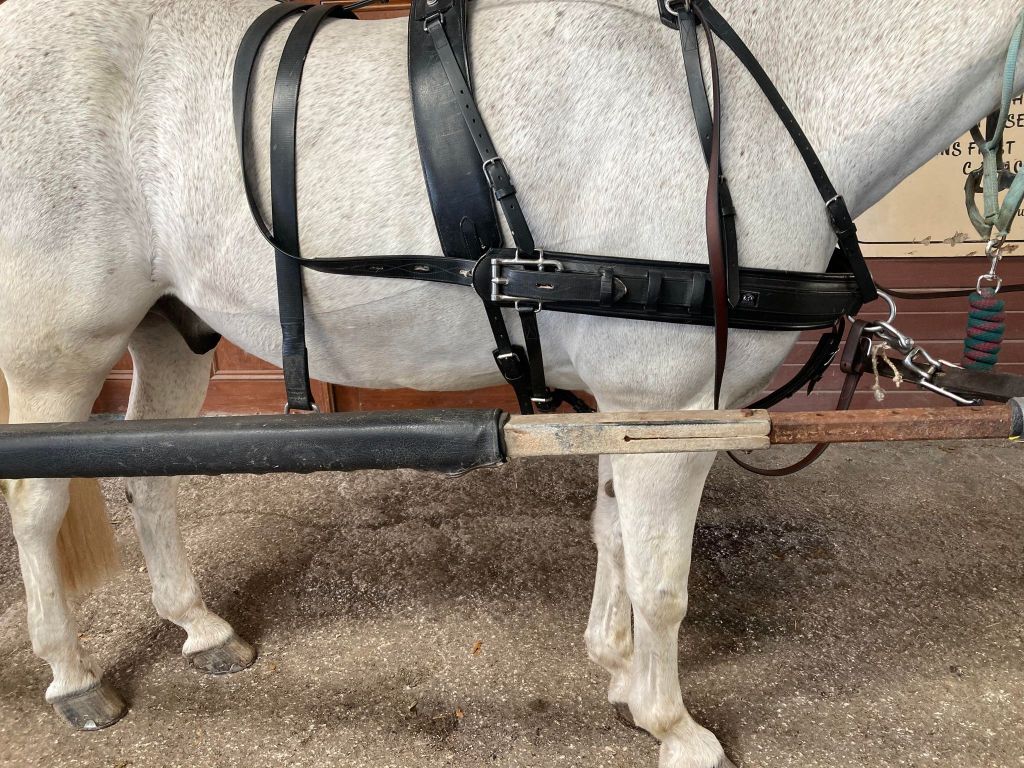
When you are driving, there should be little to no pressure on the pole. During a turn, the inside horse should be the one pulling in order to make a flowing smooth turn. If the outside horse pushes more than the inside horse pulls, this will put sideways pressure on the pole. At the very least, you will most definitely fall in during the turn, or worse, break the pole if it is a wooden one. I can attest to this from experience.
Whilst working on a road tour for Andreas Nemitz, I was driving a five in hand (pickaxe) to road coach, loaded with nine guests. The road ahead was closed/blocked with nowhere to turn around, so we decided to reverse back around the corner in order to then turn around and find another route. I successfully reversed around the corner, but in preparing to make the turn going forwards, I forgot to encourage my inside wheeler to step into the turn and allowed my outside wheeler to push the pole around the tight bend. This resulted in a loud crack and a broken pole. This really didn’t make me very popular at the time, as we still had 200 km to drive to reach the end of the tour. But later, it certainly became a source of much fun as my broken pole and its caliper were hung in the carriage house as a reminder.
The only time your pole and pole straps should be under any pressure is when your horses are holding back or stopping the carriage, i.e., braking. At this point the pole straps are helping to hold the carriage back, and your pole is under compression pressure from front to back, whether or not your wheelers are wearing breeching.
How tight should the pole straps be? They should be tight enough to keep the horse in line with the carriage, and short enough that when the horse brakes the carriage and the fore carriage moves closer to him, the carriage doesn’t contact the horse. But in a traditional carriage, you don’t want the pole straps too short, because this places a constant pressure on the horse’s neck (chine) and thus can restrict the horse’s movement and make him sore.
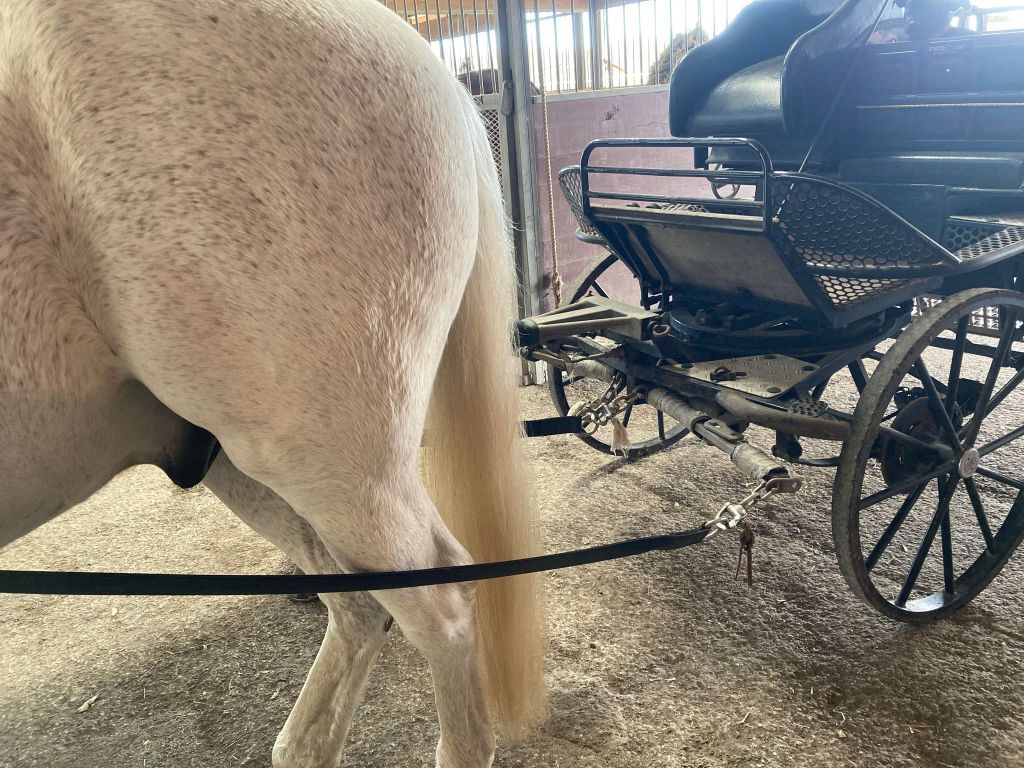
Pole straps come in many forms, from simple leather straps with buckles, to Biothane with quick-release shackles on them.
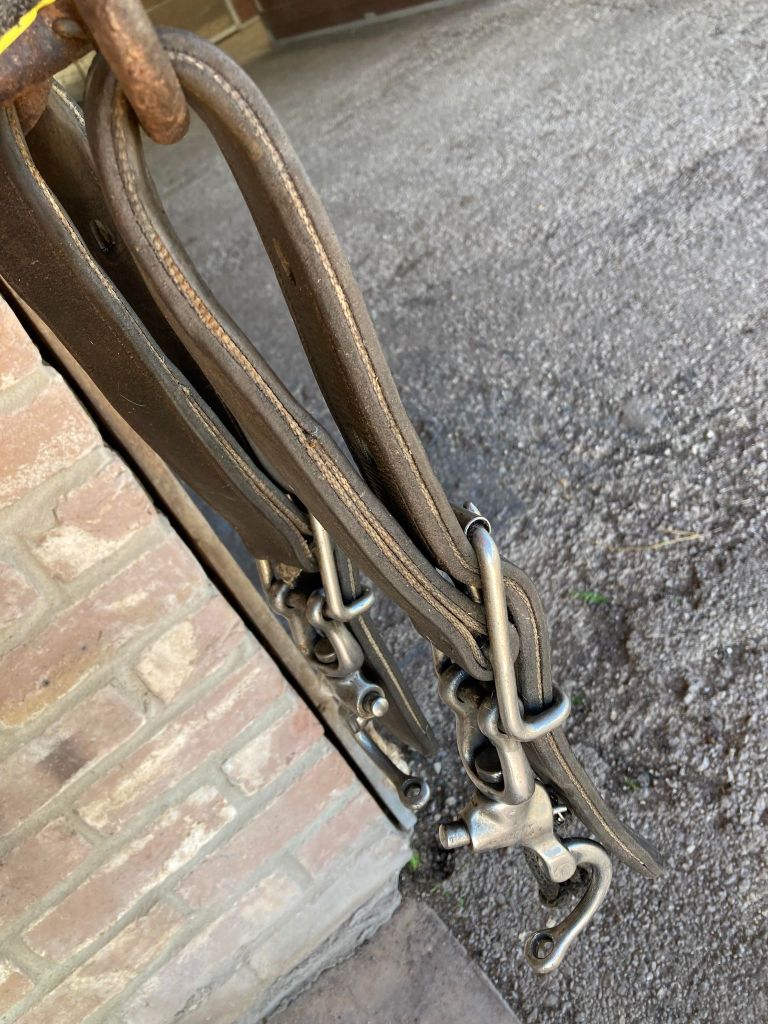
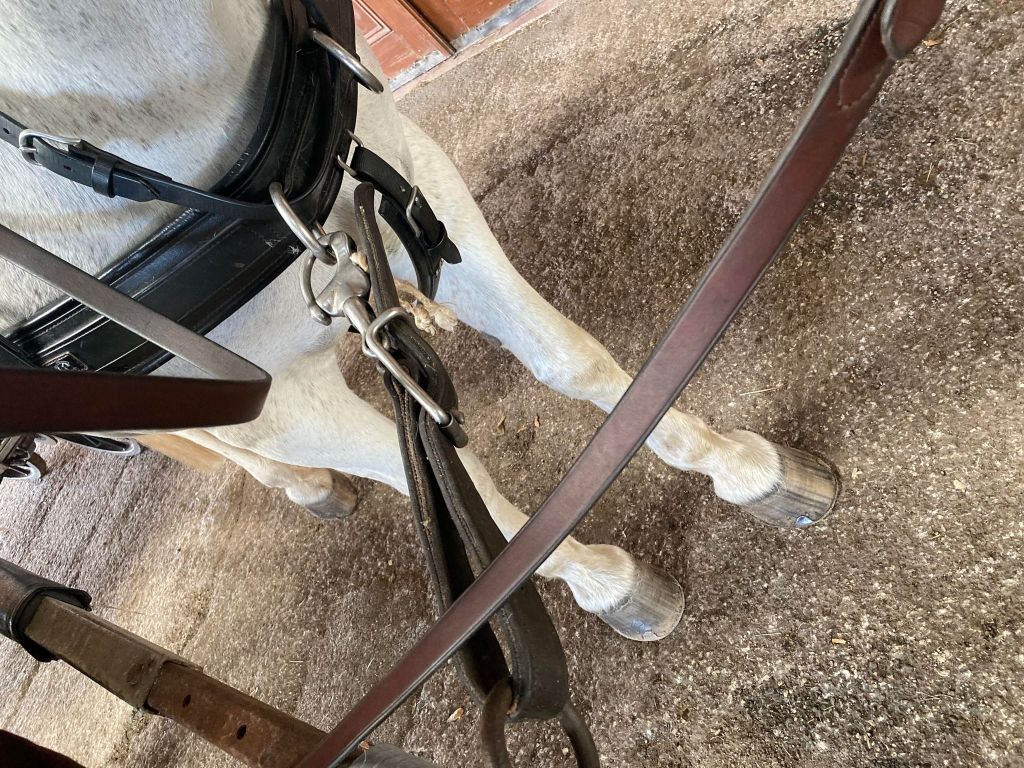
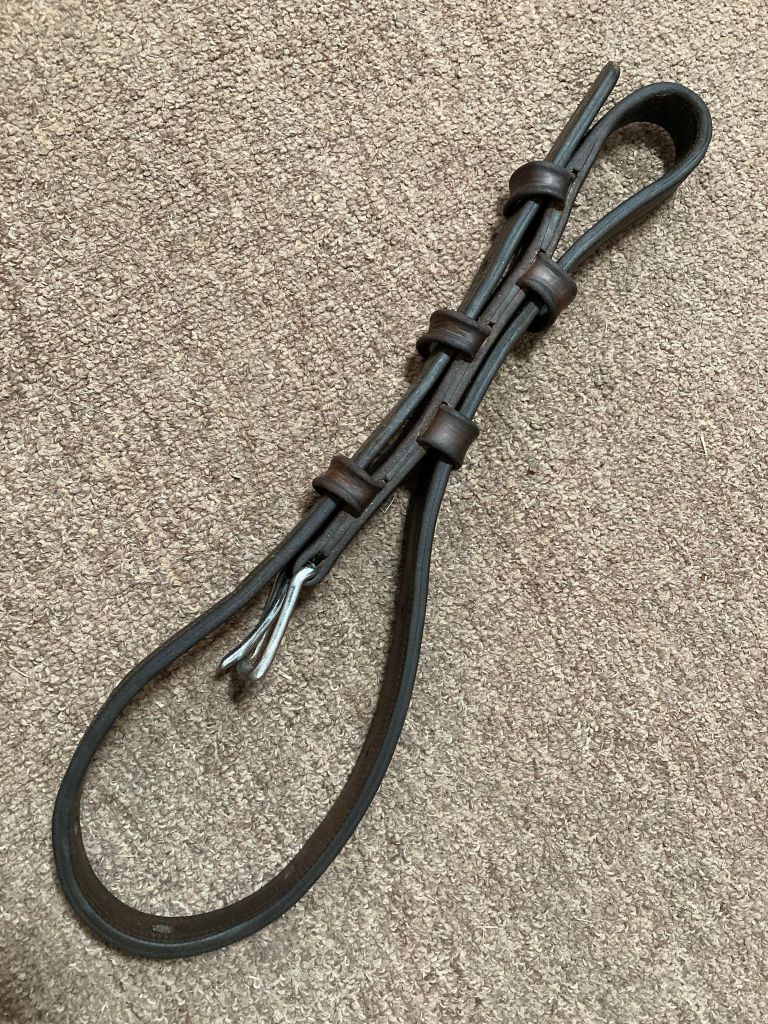
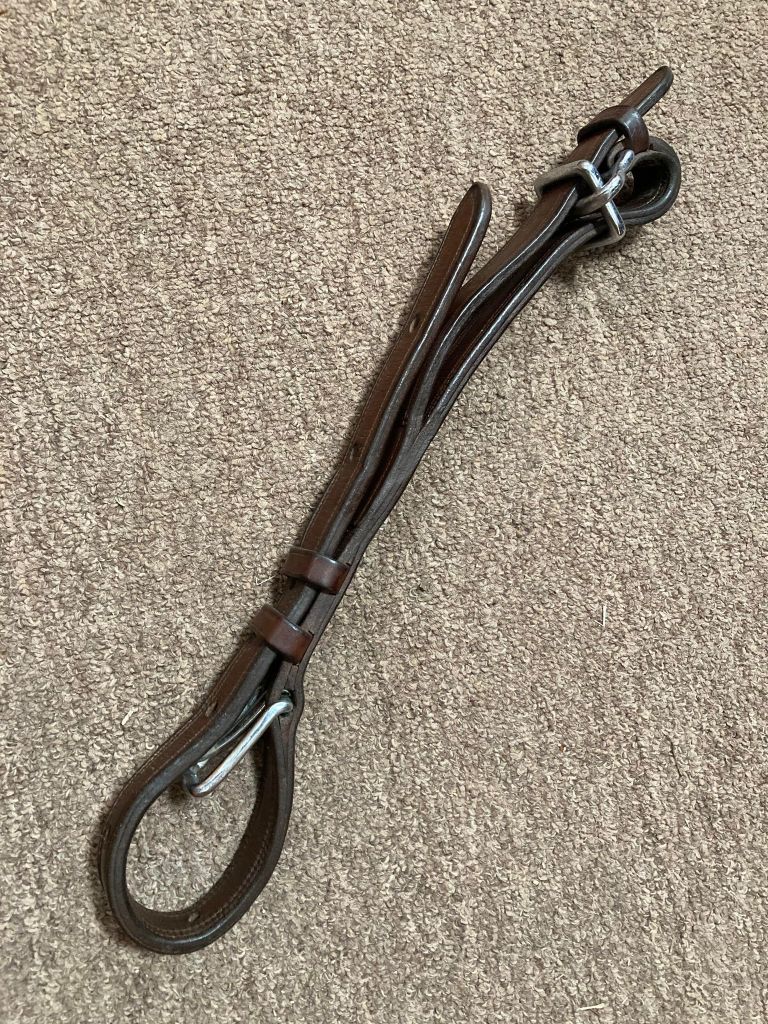
Don’t forget to regularly inspect your pole straps for wear to avoid having one break whilst driving… and enjoy your drive!
 Ranch Ride Carriage Drive LLC