
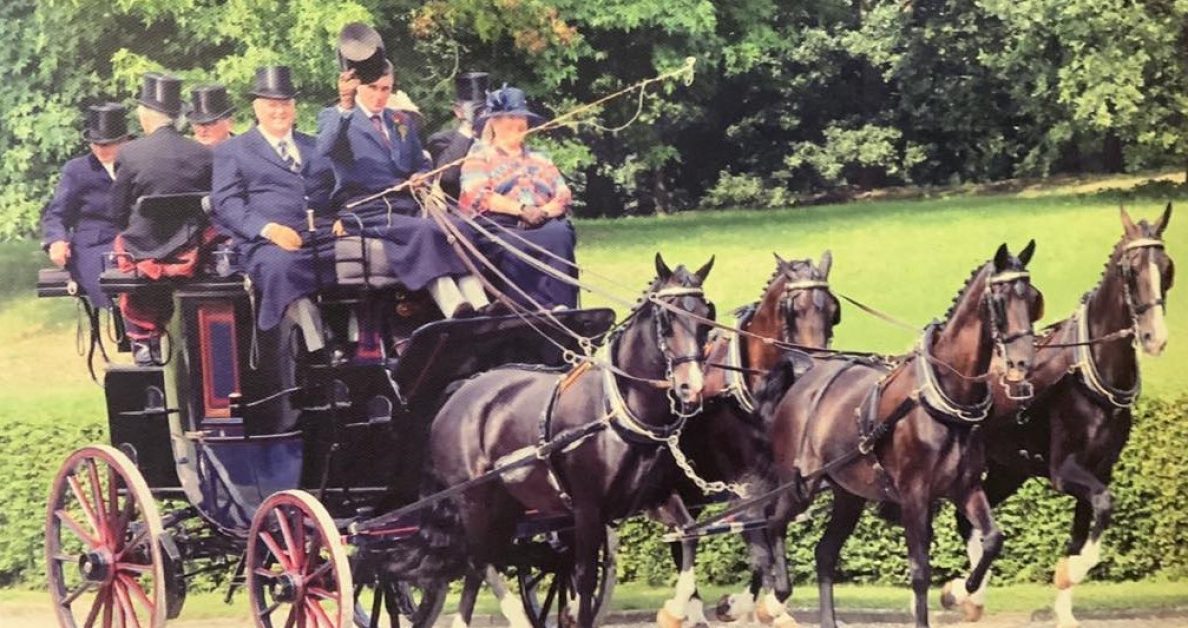
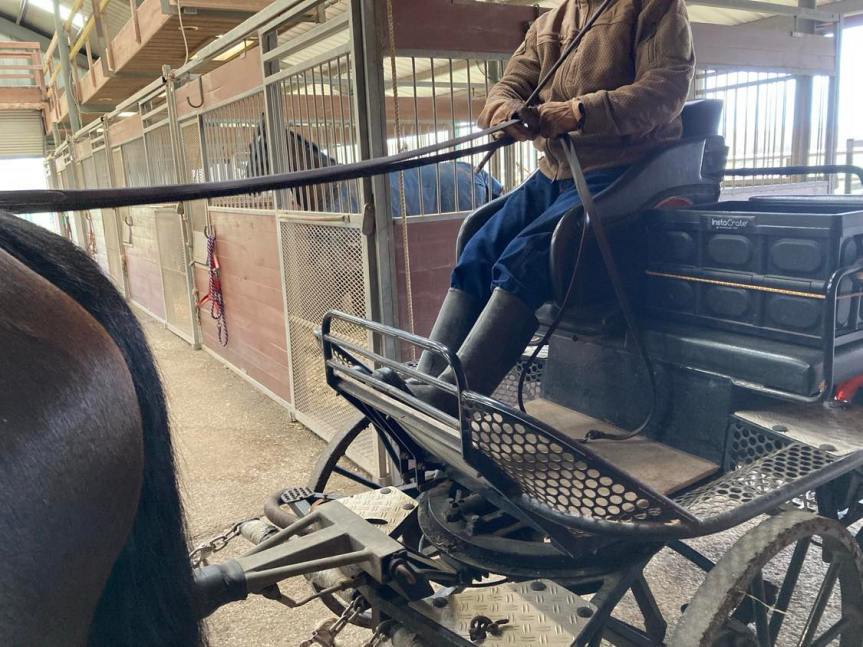
Following on from my last blog about Achenbach rein adjustments, today I‘d like to share a bit about how and why we measure our reins in the Achenbach system of driving.
It’s a lesser-known fact that under the Achenbach system, the pairs driver always measures their reins from the ground before mounting the carriage, and always mounts from the left-hand side. Why is this? The intent is to allow the driver to have control of the horses throughout the entire process of mounting the carriage and taking their seat. Once seated on the box, the reins should already be at the correct position in the driver’s hand in preparation for moving off, thus preventing any distraction or last-moment adjustments whilst moving off.
How do we accomplish this? The process of measuring reins is very simple and has just a few steps.
The driver stands on the left-hand side of the horses facing the pad, and then ensures that they are standing one arm’s length away from the pad. Using the left arm as a measure, the palm of the hand should be placed on the side of the pad with the arm straight and locked.
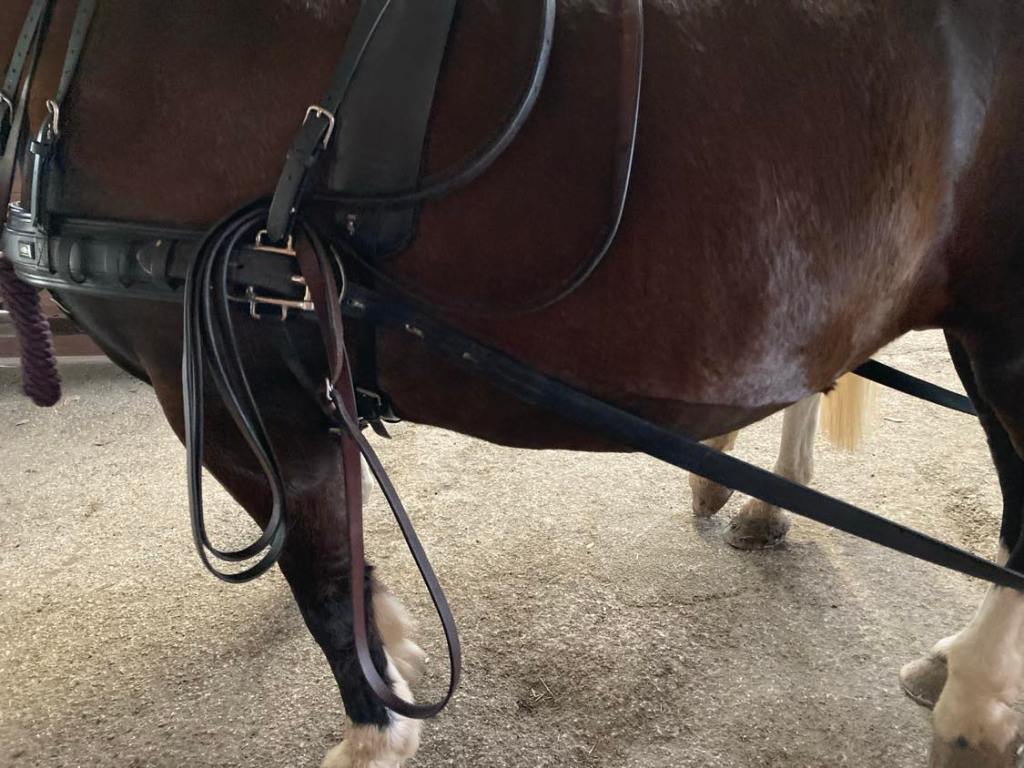
With their right hand the driver will take the reins out of the carrying strap where they were placed during the putting-to process, and lay the tail end of the reins over their left forearm. This prevents the reins from being dropped, or worse still, getting caught around the driver’s feet.
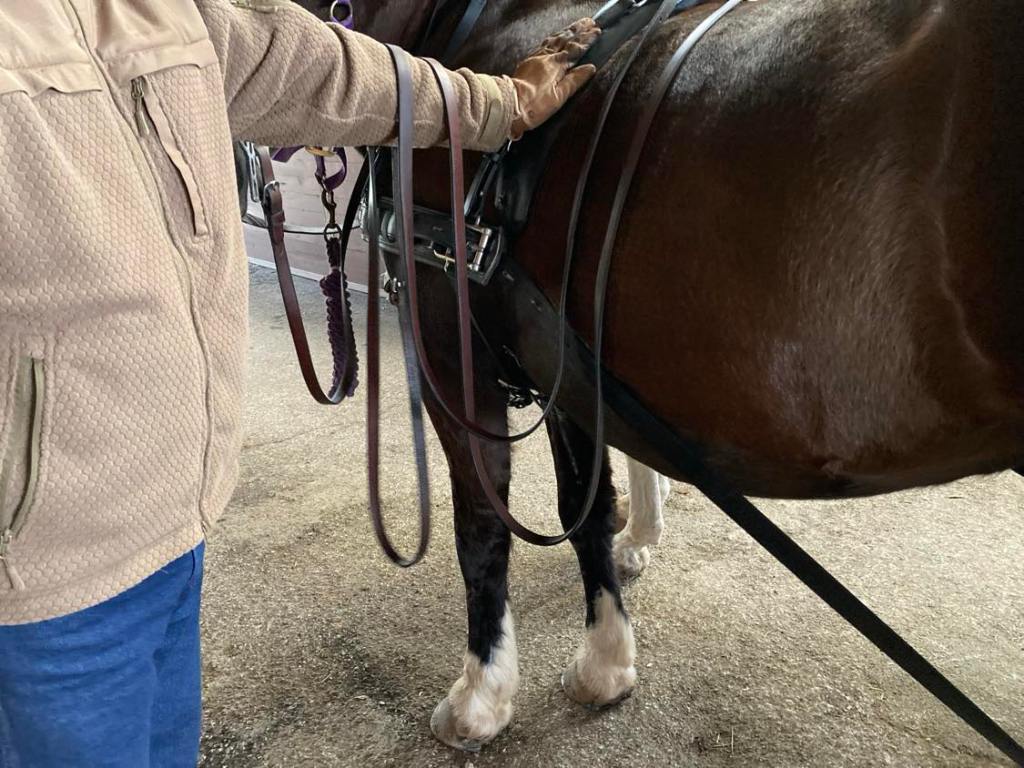
The right rein is then picked up by the right hand and placed between the index finger and second finger (aka cigarette position), and the driver gently takes up a contact with the right-hand horse’s mouth. Once the driver has a contact, they slide their hand down the reins until it touches the seam in their pants and their arm locks in a straight downward position. At this point the rein is measured.
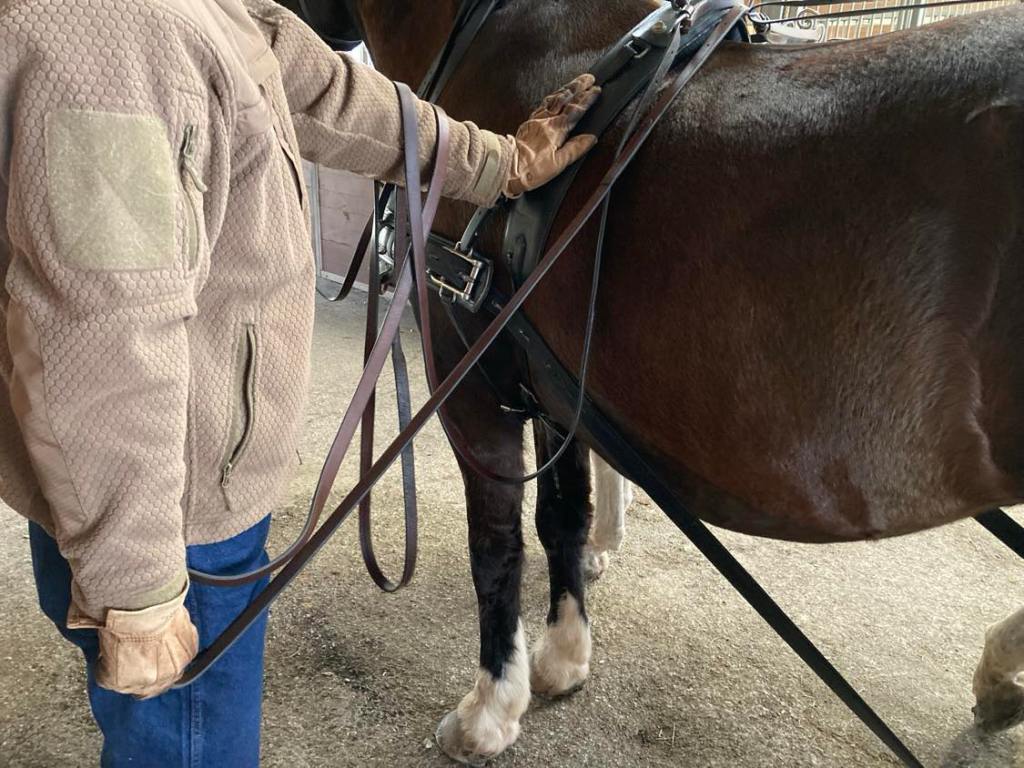
It’s at this point that the left rein is laid on top of the right rein. We then ensure that the holes in the reins are aligned with each other (not the coupling buckles, which can be set differently as described in my previous article on rein adjustments). The driver will line up the first hole on the left rein with the first hole on the right rein, and then slide the left rein away by one hole. The first hole of the left rein should now be aligned with the second hole of the right rein, giving it a little extra length from the driver’s perspective. Why do we do this? It is because we always sit on the right-hand side of the carriage, and so the left hand horse is slightly farther away from you than the right hand horse.
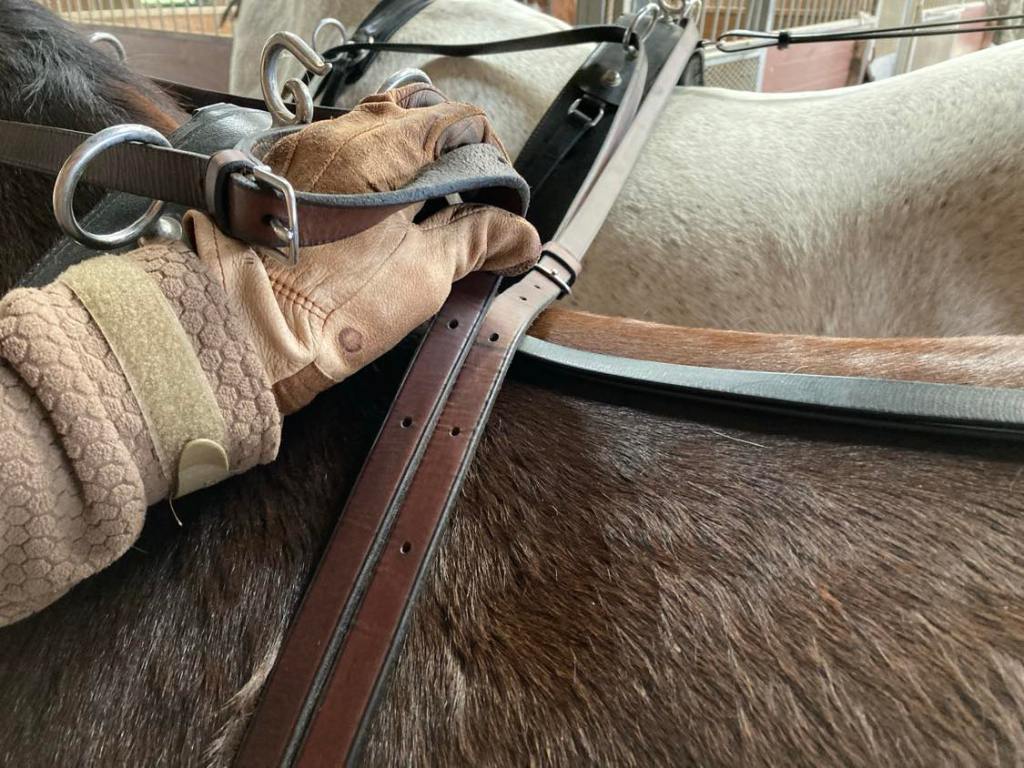
Once we have our reins measured, they are transferred to the left hand which holds them when we drive.
I should note here, this measurement will be correct if you are driving something like a coach with a high box seat, which places the driver higher from the ground but generally farther forward above the horses. However, if you are driving a modern carriage or something similar where you are sitting lower and behind the horses, this measurement needs to be altered: the driver will lengthen both reins equally with their right hand whilst they move back until they are next to the front axle of the carriage.
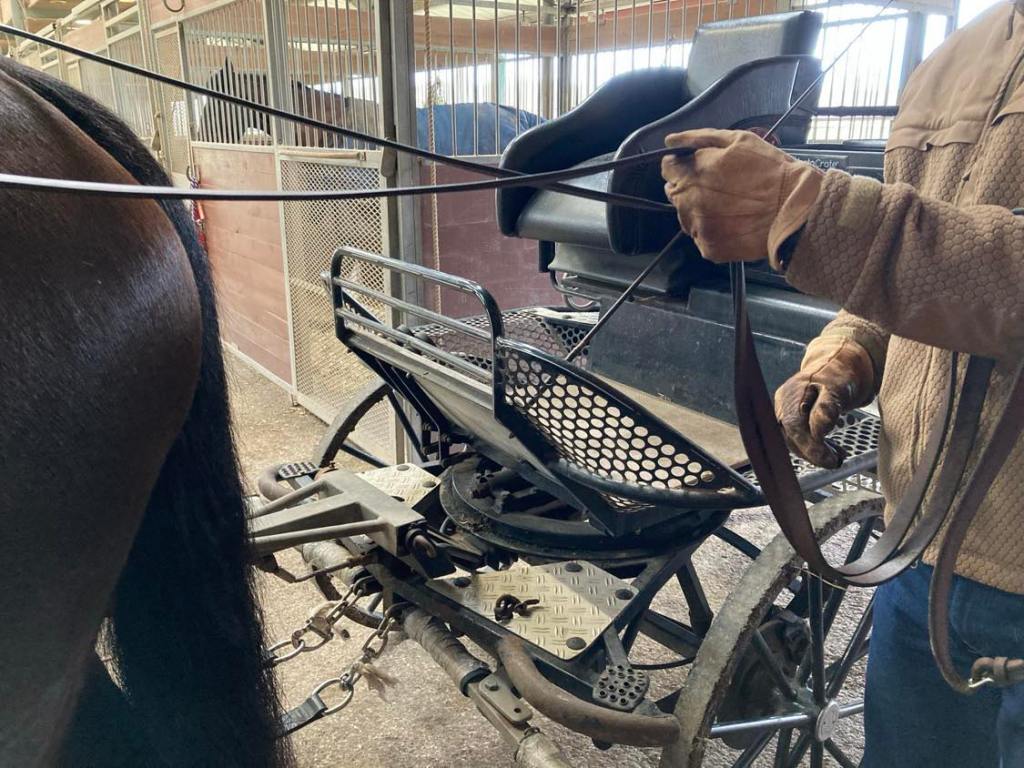
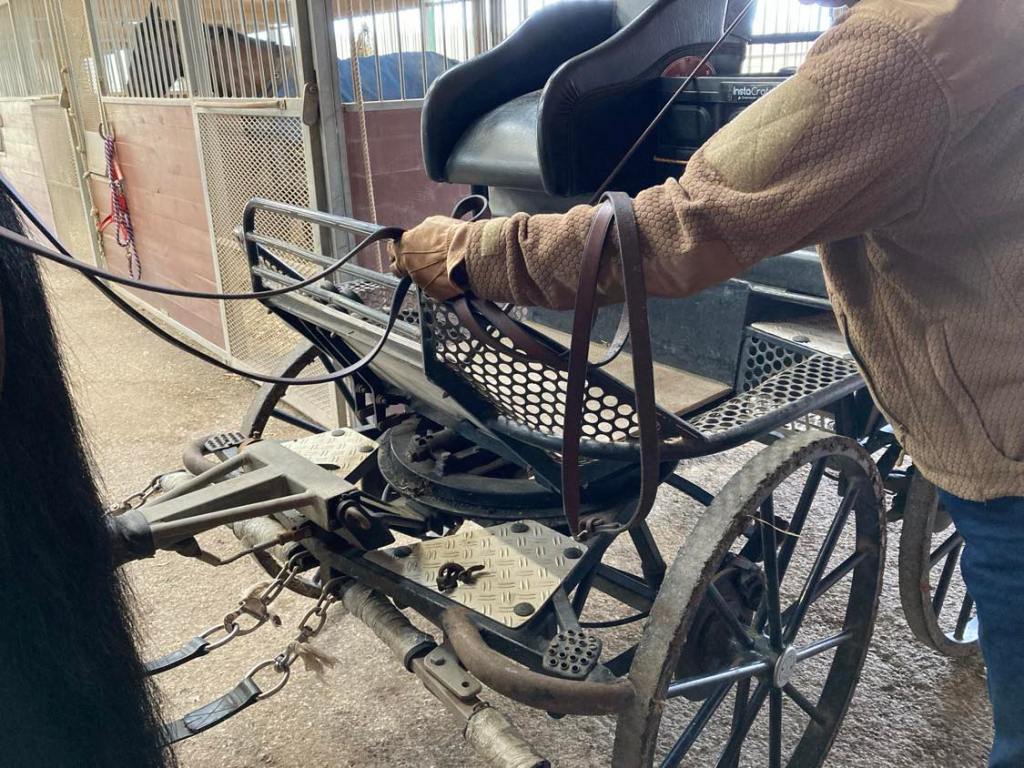
Once the driver is in this position, they are almost ready to mount the carriage. But remember, the left rein is slightly longer than the right, so how can the driver maintain their desired even contact with both horses during the mounting process? The left rein needs to be shortened via a loop for the mounting process. The driver steps forward and makes a loop in the left rein with the right hand and places it under the left thumb, whilst maintaining their grip on their initial measurement and making sure the tail of the reins is still over their left arm.
Having the loop in the left rein maintains the desired even contact with each of the horses. If the horses do move, they should only go forwards in a straight line. The driver is now ready to mount the carriage.
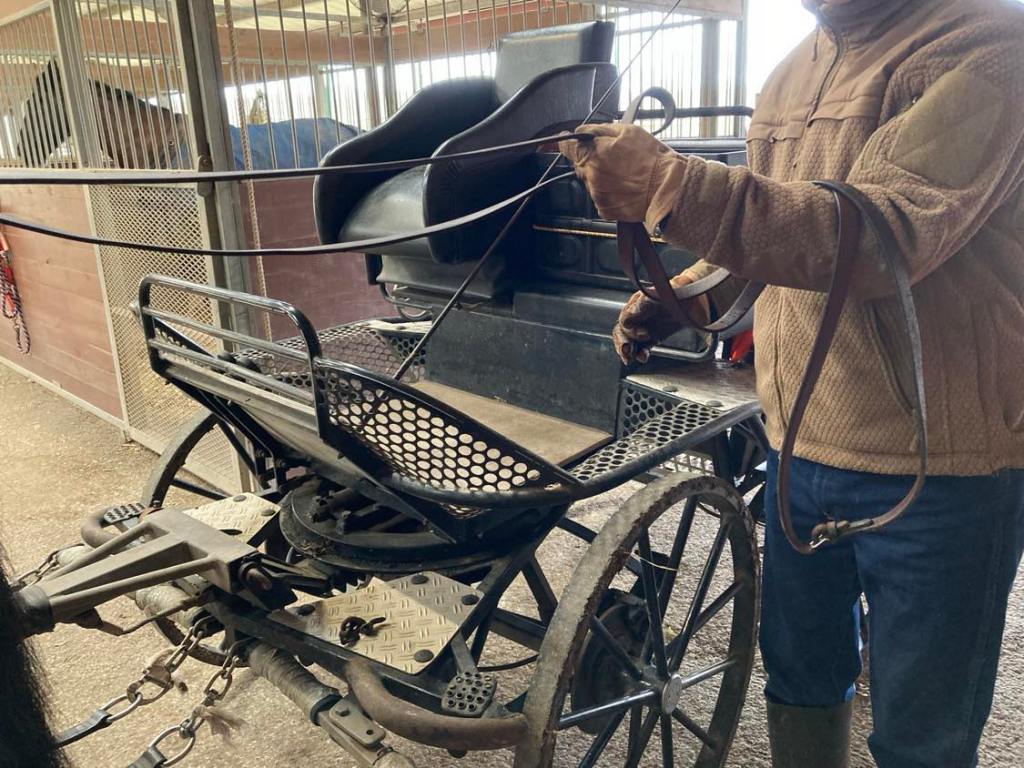
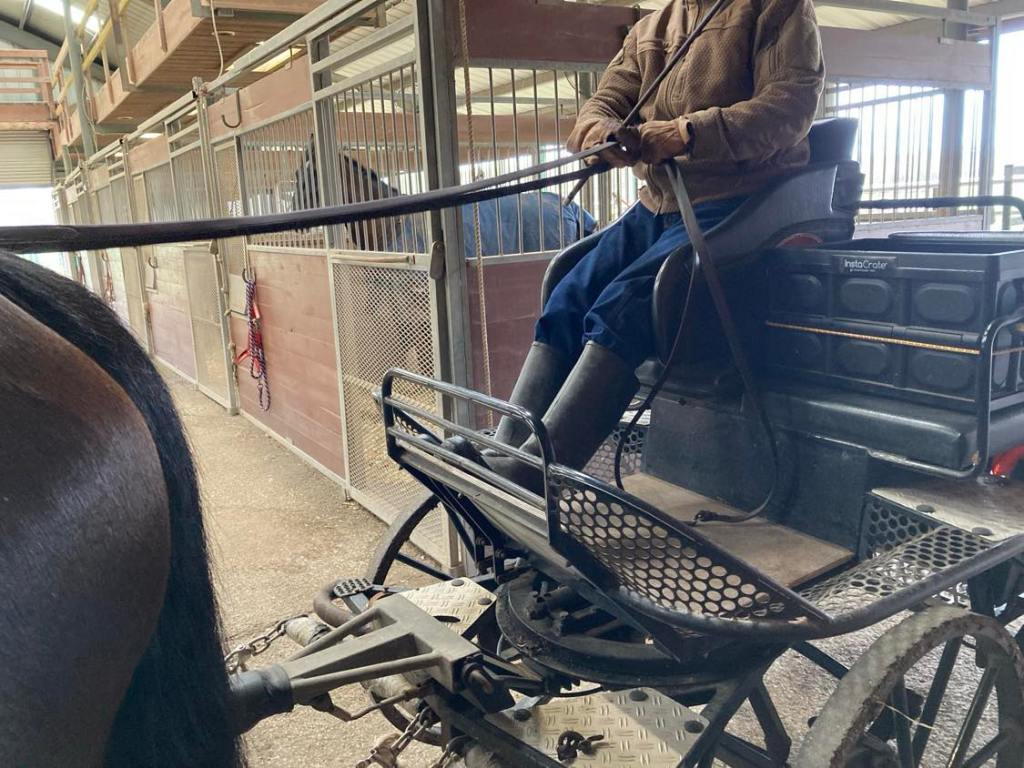
During the mounting process, the driver slowly allows the left loop to slide out of their hand as they move to the box seat, and as they are seated the reins should now be even and ready to move off.
 Ranch Ride Carriage Drive LLC