
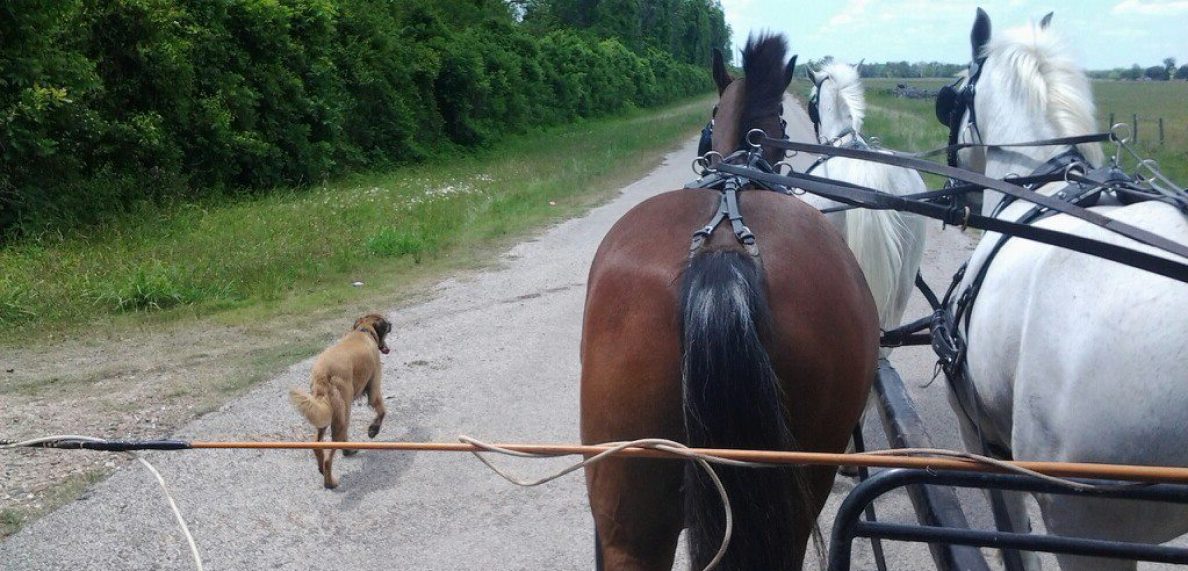
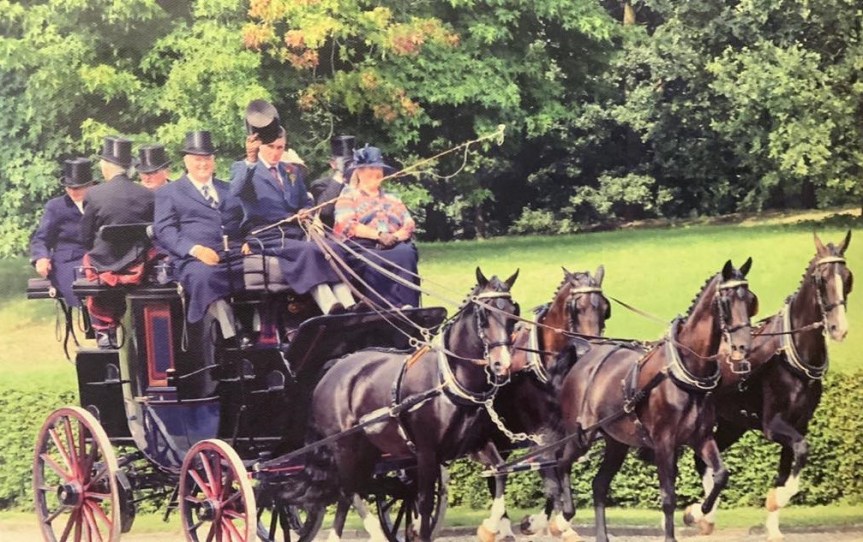
Recently, the British Driving Society and Mr Private Driving made some very informative social media posts regarding driving whips, and their style and use. Here, we are amplifying and expanding a bit on their points.
Someone unfamiliar with driving might wonder, why do we carry a whip at all? Many a Hollywood movie might give us the false impression that one need only smack the horses’ rumps with the reins, or that using the whip is cruel. Not so! The whip is an essential tool for the driver to communicate with the horses. It is a very important functional aid which replaces your leg aids and complements your voice commands and rein aids. Like all other training, your horse should be well-trained to respond correctly to your whip aids.
Generally, you can use the whip:
- On the shoulder, to encourage the horse to go forward.
- Quietly on the hip, when asking the horse to bend.
- To help the horse relax by rubbing the bow/curve of your whip across the horse’s back.
The whip is properly used in a gentle and reassuring manner, not to strike or hit the horse’s back or rump. The British Driving Society posted an excellent diagram at this link, showing where and how to properly apply the whip to the horse.
If whip aids are so important for driving, then let’s not just leave the whip in its socket on the carriage, or worse yet, in the harness room! It should be carried in the right hand, at a 45-degree angle to the dashboard of the carriage, and held by the base of your thumb. The other four fingers of the right hand are kept free to manipulate and adjust the reins, which are held in the left hand. I’ve always been taught that you should hold the whip with the ferrule in the middle of your hand when you’re not using it. This takes a little practice. In my experience, this is the one thing that new drivers struggle with the most, as they are just beginning to develop the necessary hand strength and coordination. Most modern whips don’t help matters, as they aren’t especially well balanced and tend to be top heavy. In contrast, many traditional wooden whips have the butt end of the cap filled with lead to help balance them in the hand.
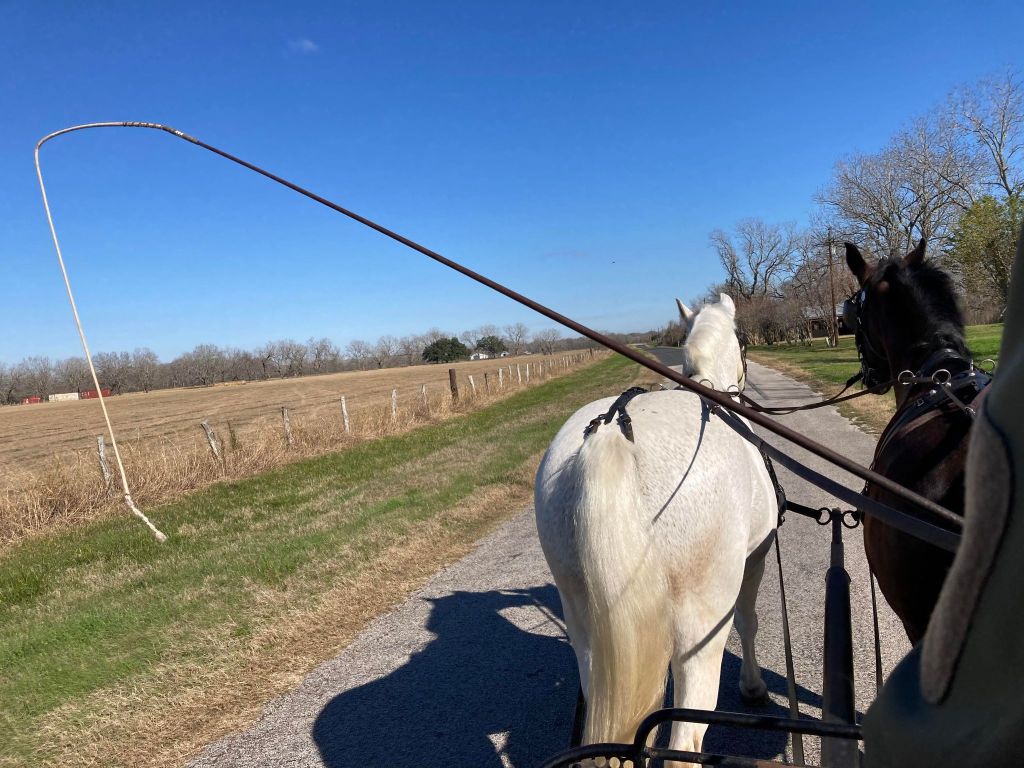
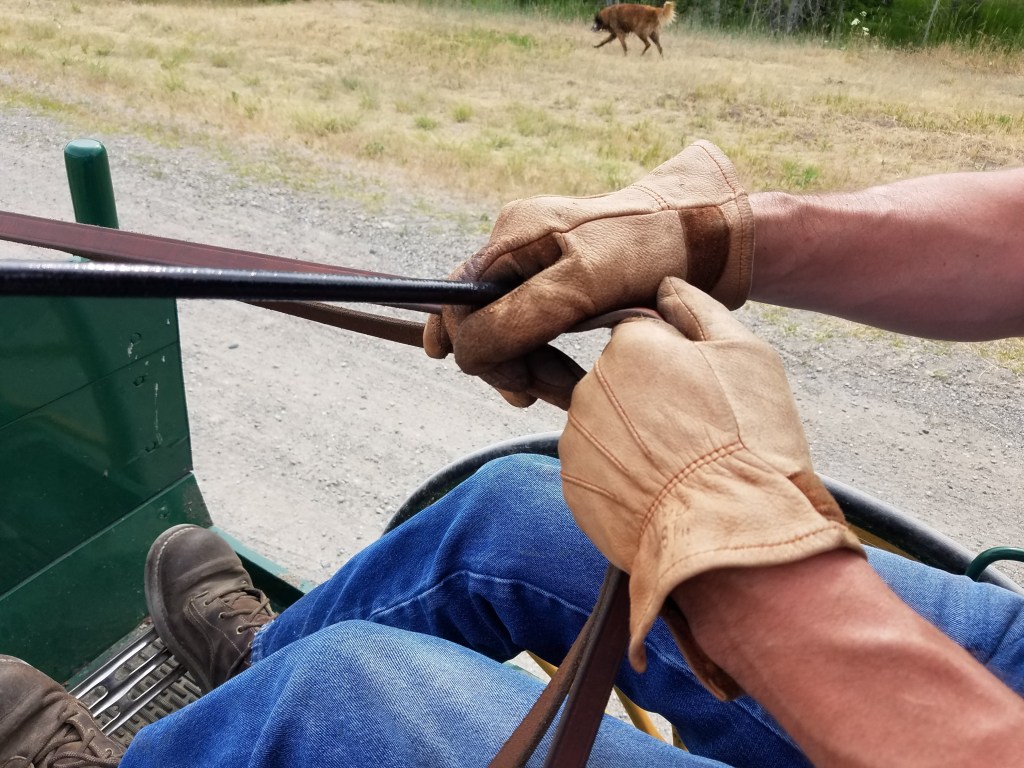
When actively using the whip, hold it securely in your hand. Remove your right hand from the reins before attempting to use your whip, because if you don’t, you risk jabbing the horse in the mouth. With the hand free from the reins, you can use your whip on either side of the horse’s body. It’s especially important that you touch the horse with the lash, because if you try to use the stick – especially with an antique whip – you run the risk of breaking the stick and/or the quill in the bow at the top of your whip.
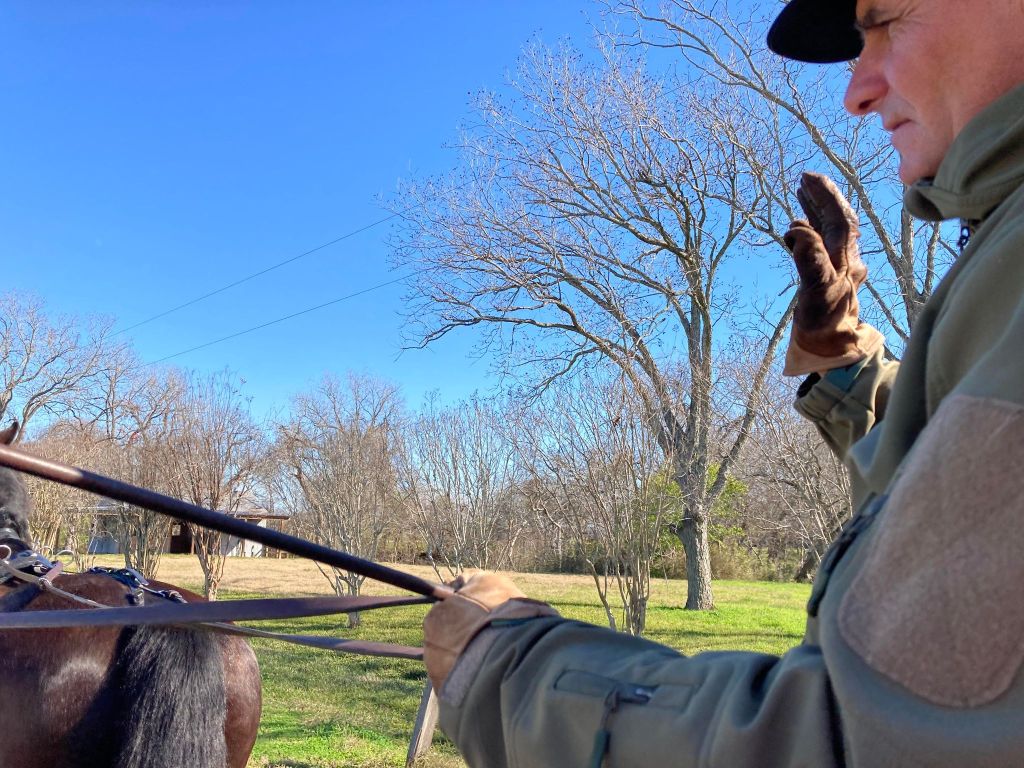
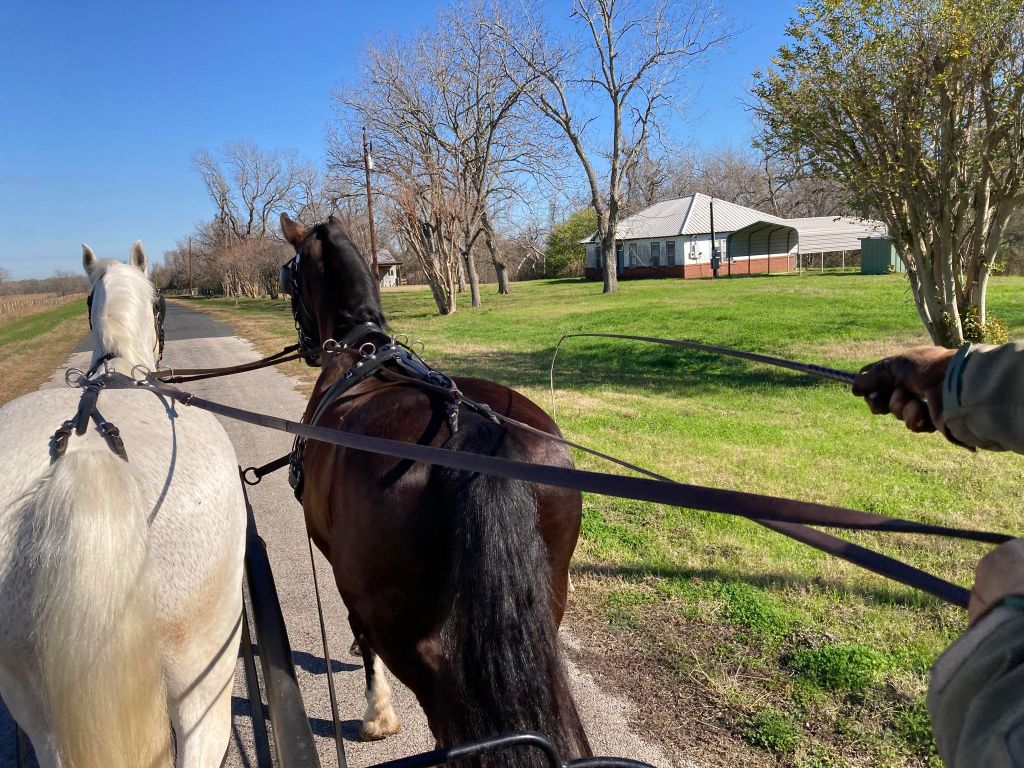
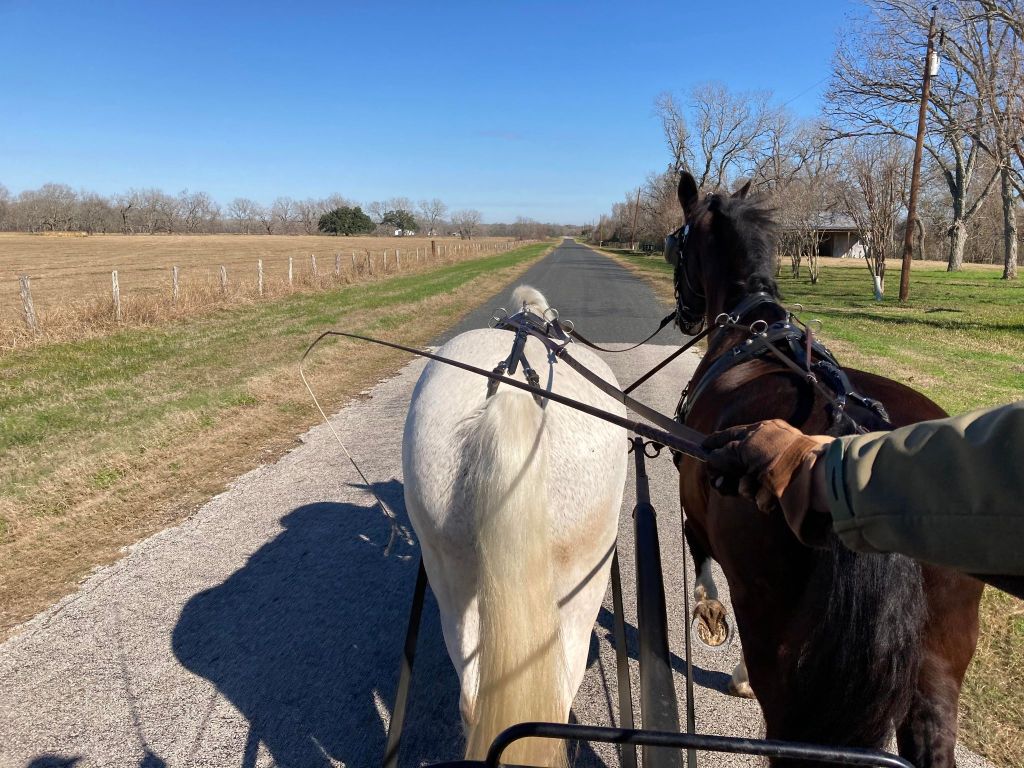
Whips are made in various lengths. Choose a whip that is the correct size; are you driving minis or drafts? Pairs or four-in-hand? The British Driving Society’s post was very helpful in suggesting the appropriate length of whip for the turnout.
Whips come in two basic styles: bow top, and drop thong. Both can have either wooden or synthetic sticks. The bow top can have quill or plastic bow tops. Traditional quill bow tops should always be stored on a whip reel to support the quill.
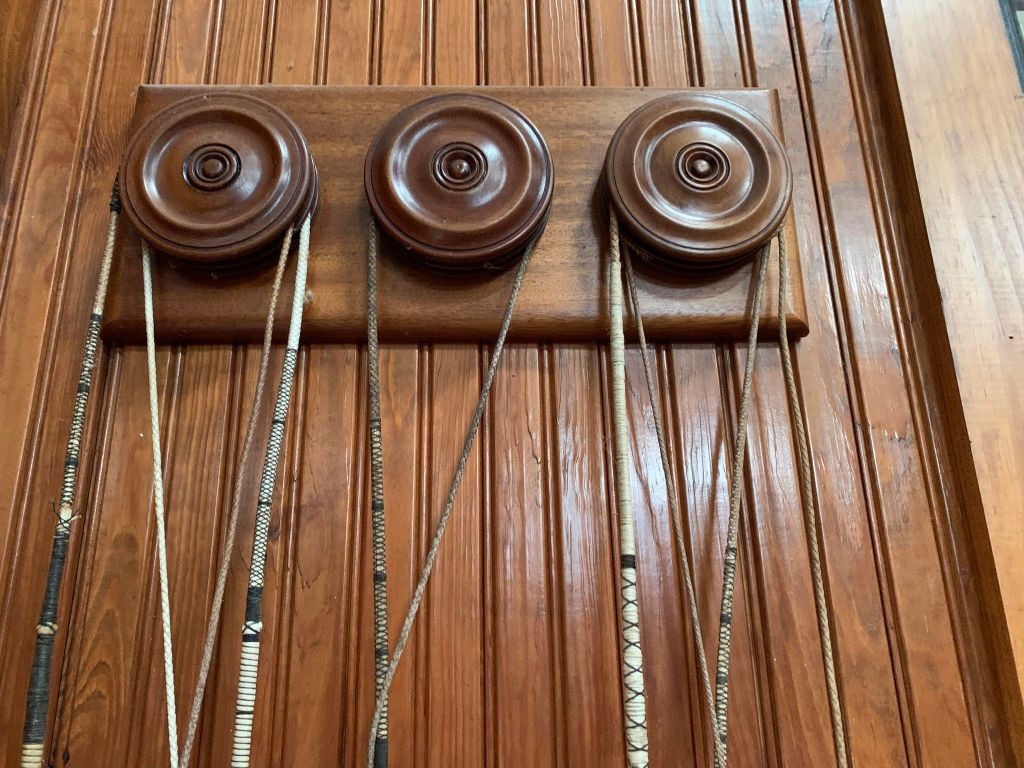
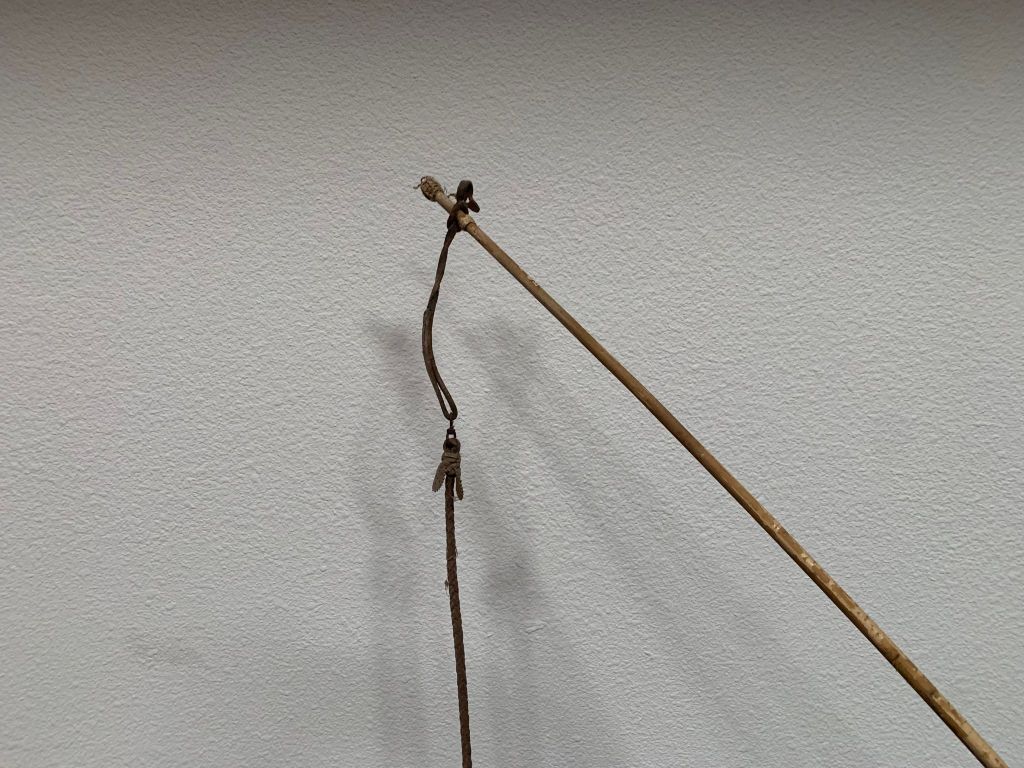
The drop thong is generally simpler and more robust than a bow top whip. Those with a swivel at or near the top of the stick are sometimes referred to as a Hungarian whip.
Whips are more than just a necessary driving tool. A good whip is well crafted and can even be a work of art.
A beautiful whip, of an appropriate style and used correctly, really enhances the look of a turnout. Remember the show ring is the place to show the judge how much training you’ve put into your horse, as well as the attention you have given to a correct turnout!
 Ranch Ride Carriage Drive LLC
One thought on “The Whip As an Essential, and Gentle, Driving Aid”