
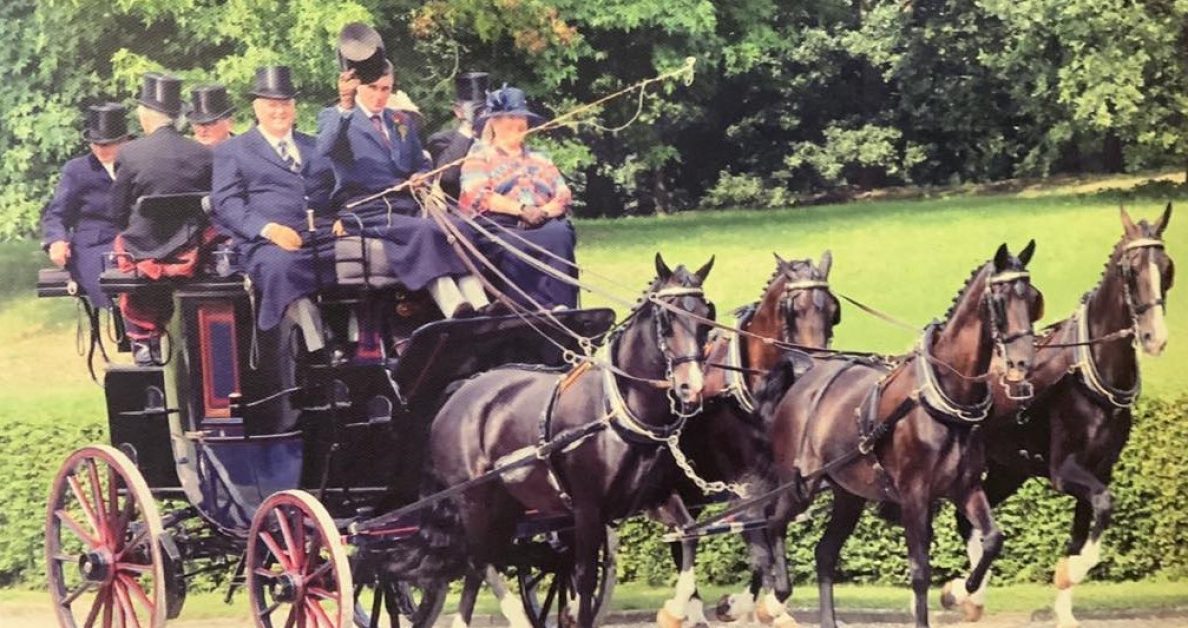
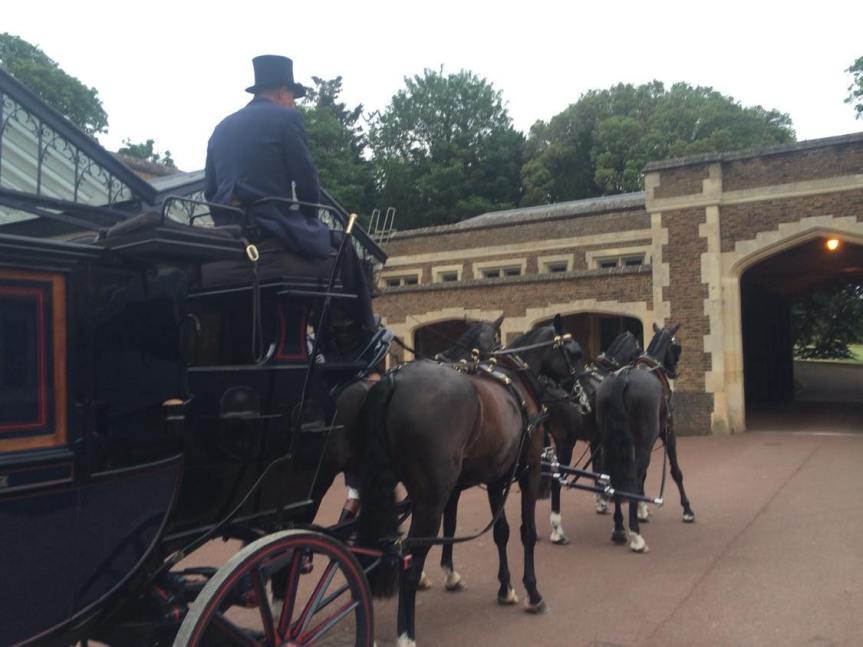
You may have seen photos of members of the British Royal Family riding by carriage from Windsor Castle to the Royal Ascot races, but did you know that members of the exclusive British Coaching Club do the same? Some of the most remarkable experiences of my driving career were the dozen or so times that our work with senior members of the British Coaching Club took us to the Royal Mews of Windsor Castle during the Royal Ascot Race Meeting.
Every year, on the Saturday before Royal Ascot Race Week, members of the British Coaching Club gather at Smith’s Lawn within Windsor Great Park for the annual President’s Drive and Dinner, and then they attend the races during the week. The Coaching club is very exclusive: there are only about 70 members worldwide. In my experience, on each day of Royal Ascot, one could expect to see about six of their members in attendance with their private carriages and teams. Of these, only a handful of select members are hosted by the Royal Mews at the private end of Windsor Castle.
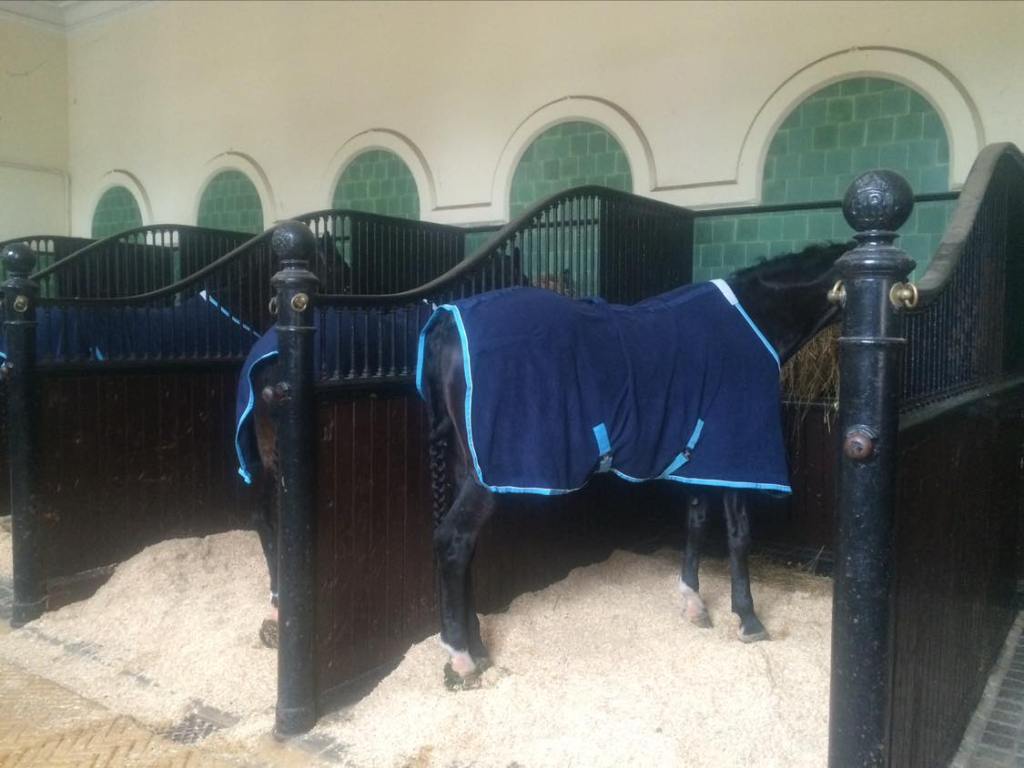
The Windsor Royal Mews is divided into several courts which, at the time we were there, housed the Queen’s personal horses, the Duke’s teams of Fell Ponies, the Royal Family’s Ascot carriages, and the motor vehicles used in and around Windsor Great Park. The top court, where the Royal Windsor fire station is based, is the least used, and opened to select guests such as the Coaching Club teams during the Royal Meeting. Queen Victoria’s riding school, with its beautiful indoor arena, is located between the top and middle courts.
On the race days, the coaches with their four-in-hand teams provide historic and unique transport to the race meeting as they travel the nine miles from the castle through Windsor Great Park – which is home to gardens, fields, ancient trees, and fallow deer – to the coaching club enclosure at the Ascot Racecourse. Once the coaches are parked in the enclosure, they serve as a grandstand for guests to watch the races. Getting the coaches into the enclosure is more difficult than one might imagine, because it requires navigating through Car Park 1, which is an exclusive area tightly packed with some very high-end vehicles belonging to the most posh attendees, aside from the Royal Family – not the kind of situation to risk a misjudgment! Typically, we would first drop off our guests at the car park, then drop the leaders from our team and use just the wheelers to position the carriages inside the enclosure. If we happened to arrive late and the car park was really full, we sometimes had to unhitch the team entirely, and position the carriage by hand! Then we would lead the horses to stalls at a facility nearly a half-mile away on the other side of the racecourse, where the Royal Family’s cars are also parked during the races.
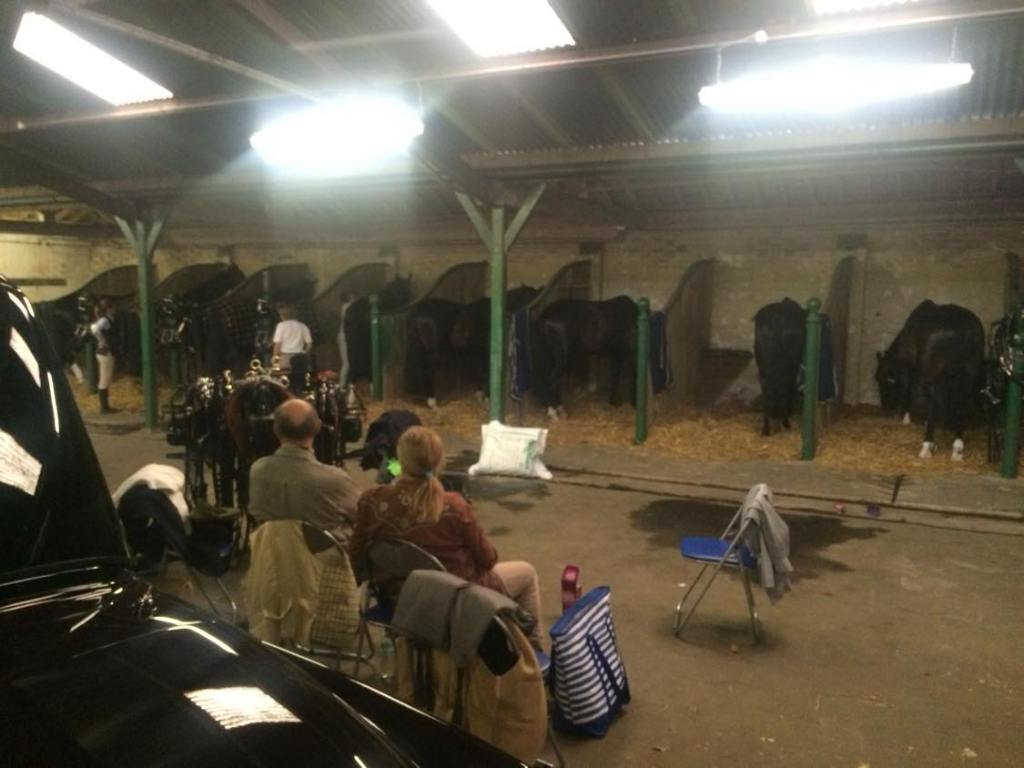
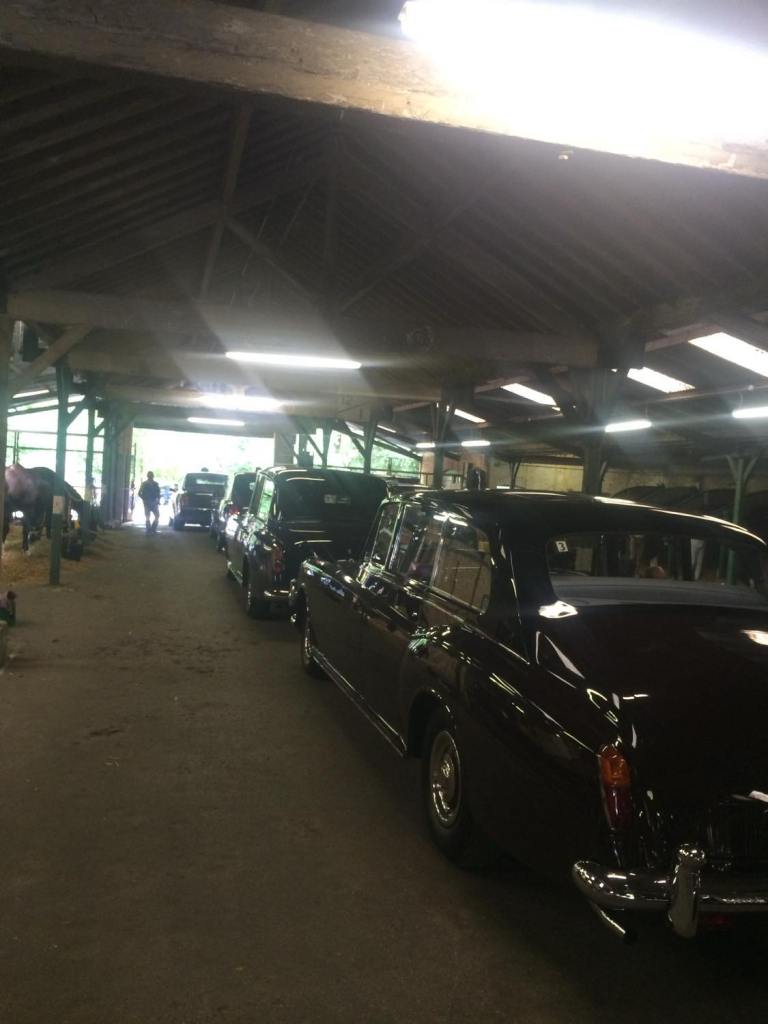
Returning to pick up our guests and the carriages in the late afternoon was especially challenging. More than 60,000 people might attend on a day during Royal Ascot. Traffic includes not only ordinary cars and buses, but also hundreds of limousines and dozens of helicopters. To avoid the worst traffic congestion, Coaching Club members usually plan to depart before the last race. Again, navigating Car Park 1 is the biggest challenge: by afternoon, the car park is even more jammed with racegoers enjoying formal picnics and perhaps a little extra champagne, and through it all we had six teams of horses jockeying for space to hitch up and depart the area.
During our drive back through Windsor Great Park, our coaches would usually be passed by the Royal Cavalcade, the cars carrying the Royal Family members back from the races. It was an opportunity to tip our hats to the senior members of the Royal Family, including Queen Elizabeth II, Prince Philip, Prince Charles with Camilla, Prince William and Princess Kate, Prince Harry, and Lady Louise, who is now an accomplished carriage driver herself.
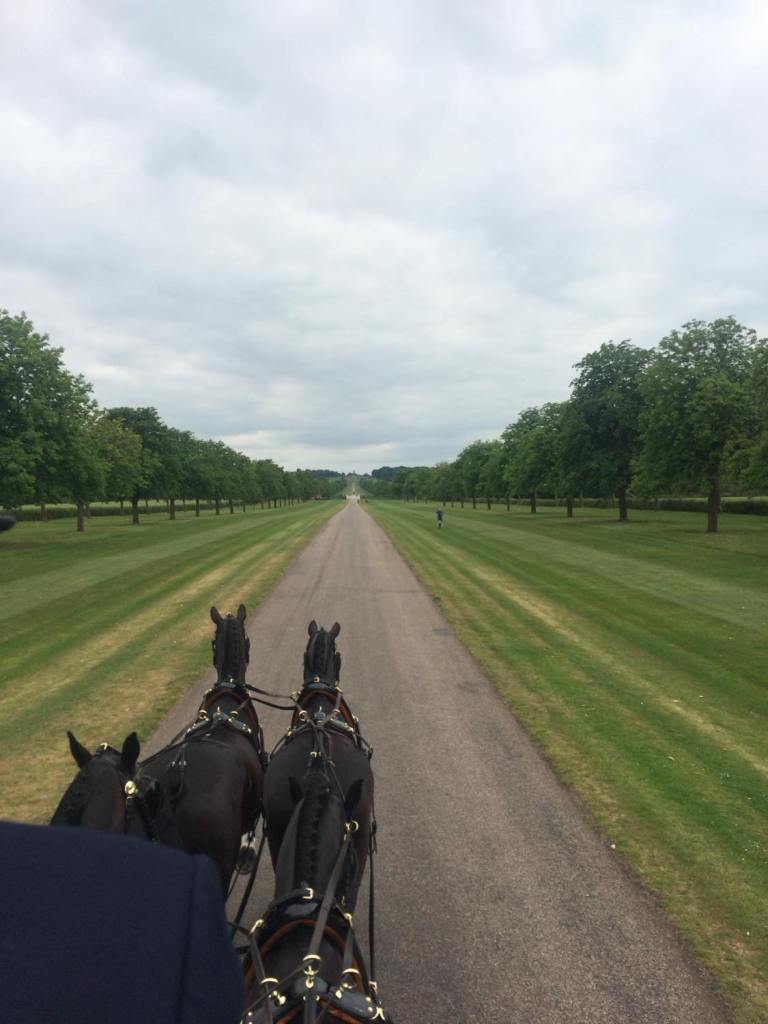
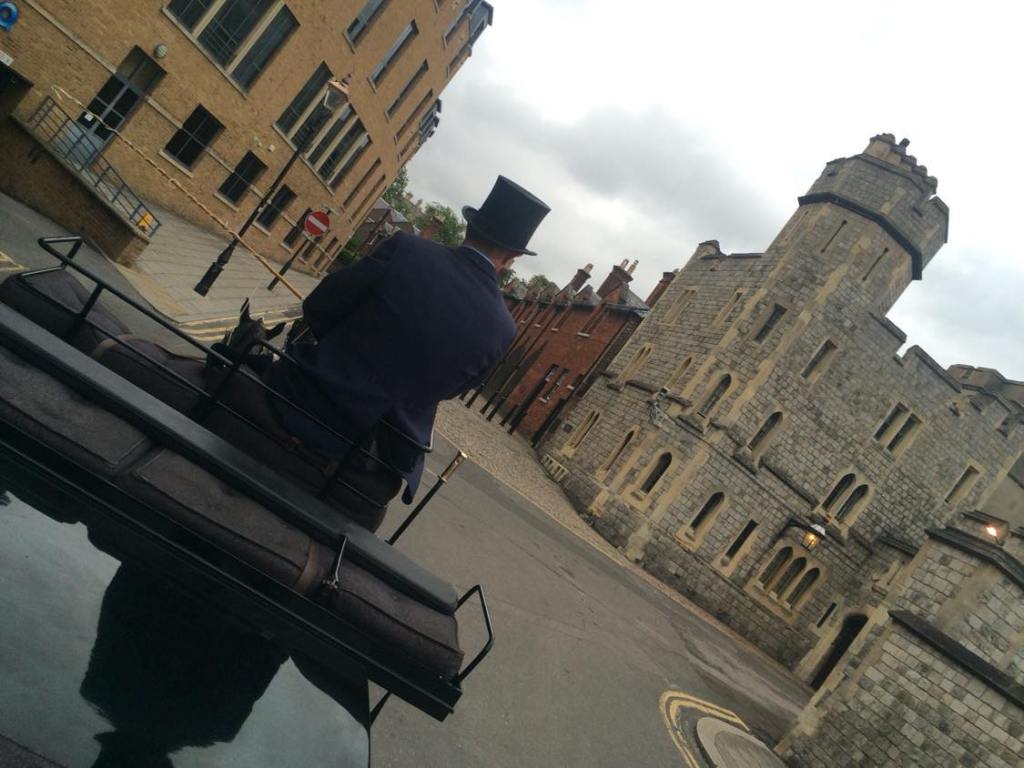
At the Royal Mews, we occasionally would encounter some of the Royal Family, and enjoyed our acquaintance with some of the staff. Another interesting person we became acquainted with there was George Bowman, who was Britain’s CDE national Four-in-Hand Champion 22 times! As befits someone of such high accomplishment, he had his own wing at the Royal Mews during Royal Ascot. Everyone, including Prince Philip, loved and respected “Uncle George.”
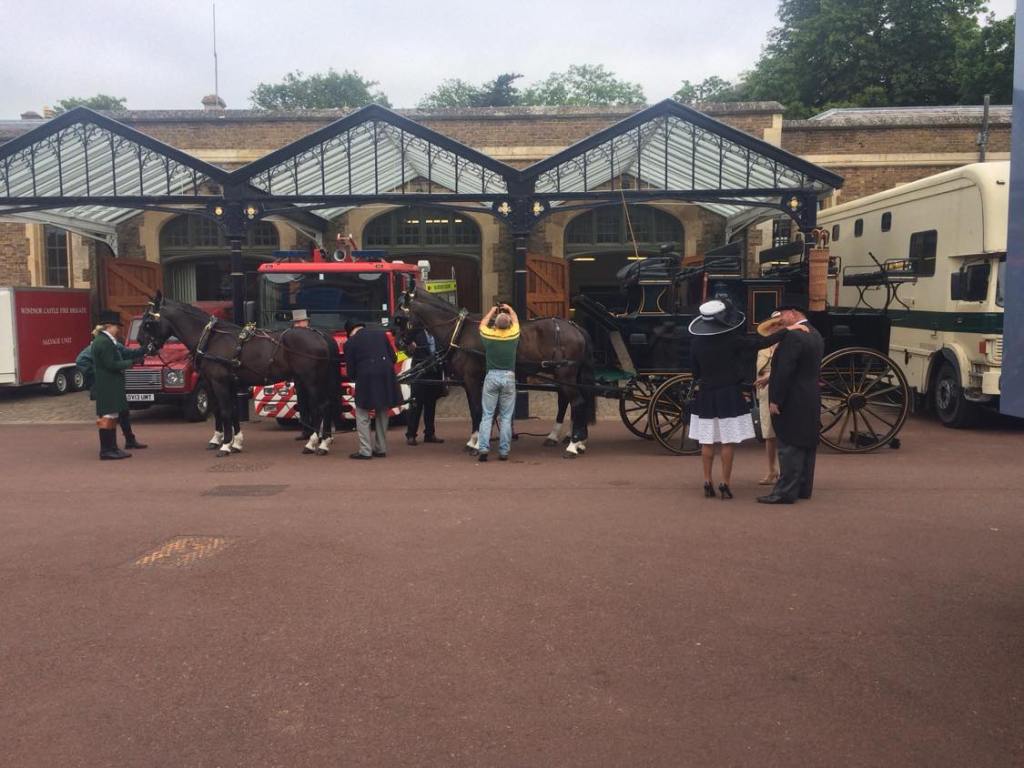
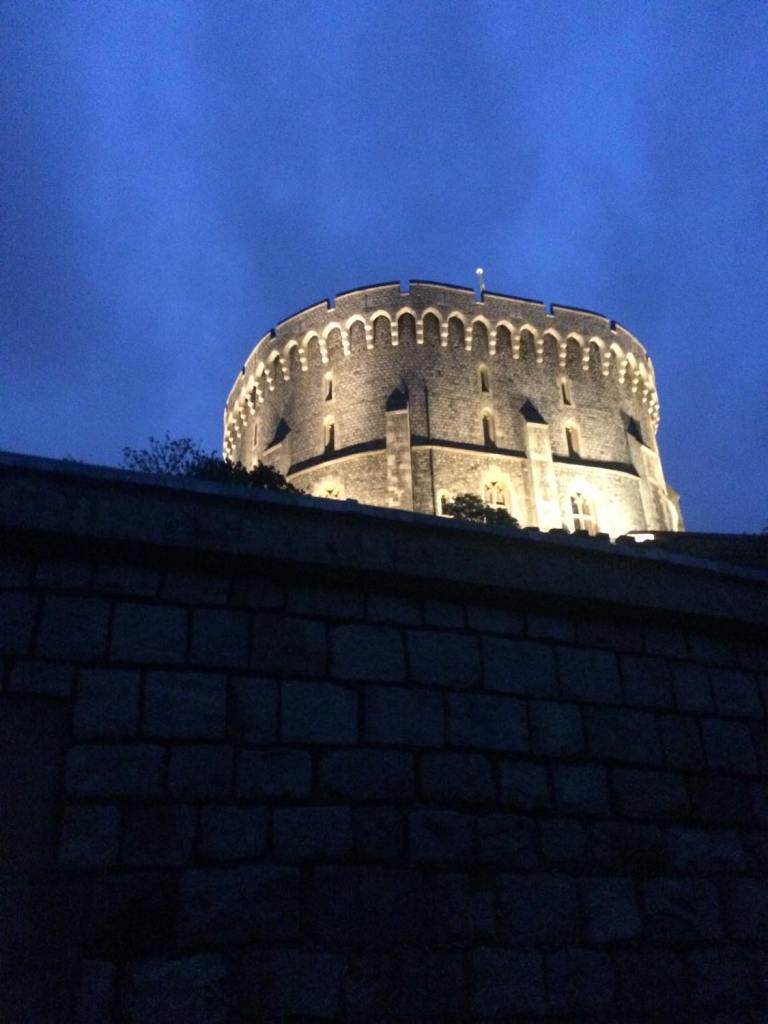
One special memory was the night I drove a coach and four back from the Coaching Club President’s Dinner and Drive into the gates of Windsor Castle at midnight. I picked up my coach owners and guests after dinner, and drove them back to the Mews. It was a beautiful but dark summer evening. As we arrived at Smith’s Lawn to collect our group, we lit the lanterns on the coach and began our six-mile drive back to the castle. To enable us to see better, we had a vehicle follow us, which enabled me to see sufficiently. Driving through Deer Park at night was a magical experience. The rumble of the iron tires and the clip-clop of the horses was accompanied by our magnificent horn blower ensuring that everyone was entertained and that passers-by kept the road ahead clear. As we rounded the corner by the Copper Horse statue, Windsor Castle came into full view, and looked splendid bathed in light. As we drove down the long walk towards the castle, our horn blower continued at full volume. We rounded the corner exiting the long walk by The Two Brewers Pub, where patrons were enjoying a late evening drink. To our astonishment, as we passed by, they merely glanced at us and continued as if this was nothing special. We entered the castle by the lower gate, and once through the gate, we made our way to the top court, home for the night.
 Ranch Ride Carriage Drive LLC