
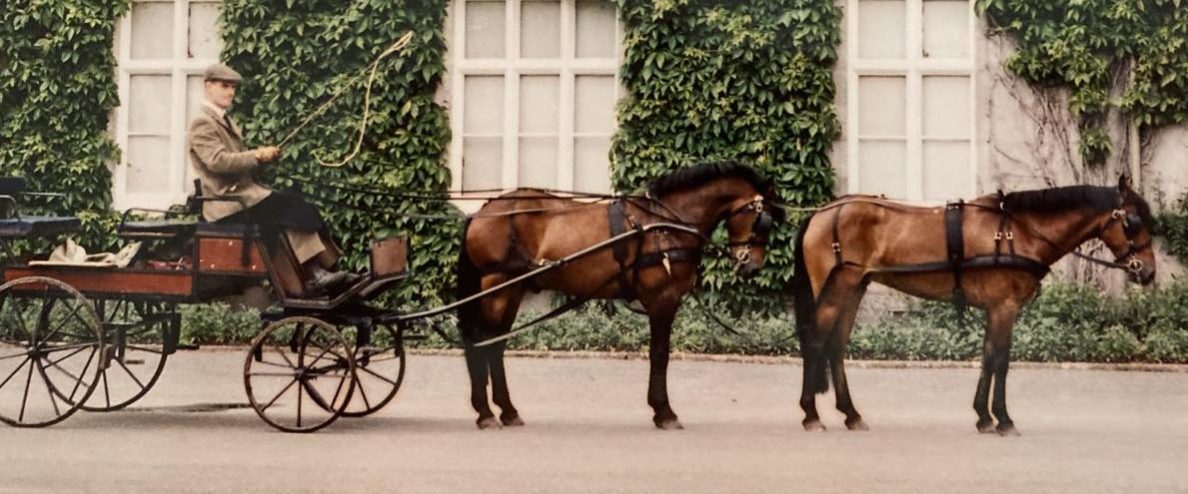

Potholes! Endless construction! Road maintenance is something we all love to hate, perhaps in part because we take for granted the ability to travel easily. Our ancestors who drove carriages, carts, and wagons certainly had a much harder time of it.
In Europe, many of the roads we use today were first built by Roman engineers. These stone-paved roads – some 50,000 miles of them, ranging from about 8 feet wide to 20 feet wide – allowed rapid, easy movement of troops and trade goods. Good roads were essential to the expansion of the Roman Empire. In many places, the roads still exist, and you can walk on the very stones laid by laborers more than 1500 years ago. In other places, modern roads follow the paths of the ancient roads.


After the Romans left Britain in the year 410, the roads deteriorated and fell into disrepair due to a lack of maintenance. Travel in the medieval era became much more uncomfortable, slow, and expensive, especially for wheeled vehicles. Rain could render roads impassable with deep mud, and it has been said that in the winter, roads could have potholes up to four feet deep! These conditions routinely caused damage to wheeled vehicles, and required more horses to move them.


Responsibility for road maintenance fell to local officials and landowners, with poor results. Commerce depended heavily on pack horses rather than wheeled vehicles. Writers describing their travels wrote that in many places, “roads” were simply faint tracks across fields, or were muddy hollows that became swamps in the winter. This state of affairs persisted until the mid-eighteenth century, when the first turnpikes – or toll roads – were established. But even though these early roads were a great improvement for the time, they were little more than gravel dumped on the ground, with little thought to drainage, erosion, or durability.
Scottish engineers Thomas Telford and John Loudon McAdam pioneered two separate, but similar, road-building methods in the late eighteenth to early nineteenth centuries. Both systems used larger stones as a base, grading upward to a fine gravel surface, with attention to good drainage. Gradients were also more scientifically designed to be safer for wheeled traffic. Carriage makers were able to build lighter vehicles, travel became safer and more comfortable, and travel times were greatly reduced. Ultimately, the new roads built with Telford’s and McAdam’s designs became a key factor in the modernization and industrialization of Britain.


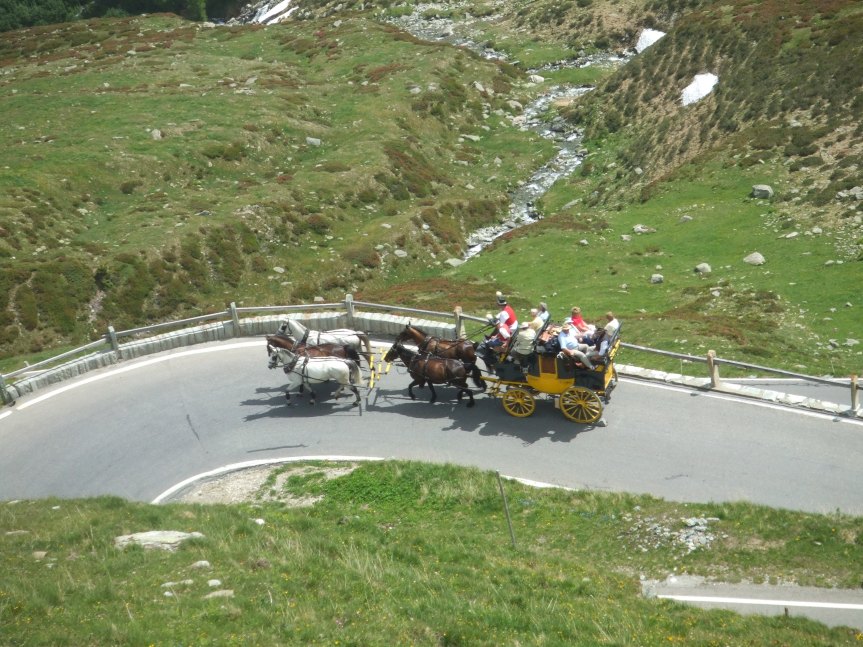
There are those among us who love to experience bygone times by traveling on horse-drawn carriages, but some aspects of those bygone times are best left behind. Modern roads are very much appreciated for the safety and comfort they offer!
Fun Fact: John McAdam’s road design was later improved with the addition of tar to bind the surface gravel together for durability and water resistance. This surface was known as tar McAdam, or “tarmac.”
 Ranch Ride Carriage Drive LLC