
When choosing driving harness for your horses, BioThane (synthetic coated webbing) and leather are both popular materials for horse harness. Which is better? Your choice really depends on your budget, and your intended use of the harness.
Let’s look at some of the features that drivers consider when purchasing harness, and see how these materials compare to one another.
Budget: synthetic harness, including BioThane, tends to be much less expensive than leather harness.
Durability: BioThane is resistant to abrasion, cuts, cracks, mold, mildew, and chemicals. It is waterproof and can withstand water exposure without getting damaged. In contrast, leather harness can be damaged by water exposure, mold, mildew, or chemicals if not properly and promptly cared for as soon as possible after use. Considering that BioThane is typically both less expensive and more durable than leather, your dollar will definitely go a lot farther with BioThane.
Tensile strength: BioThane harness has a uniform tensile strength, ensuring consistent performance. The tensile strength of leather can vary according to factors like fat content, tanning methods used, type of finish, stiffness, and age. Leather can also stretch under a heavy load. Tensile strength is also a safety consideration: leather will likely break in an emergency such as an entanglement, whereas BioThane may not break.
Weight and comfort for horse and driver: BioThane harness tends to be lightweight and easy to carry. It has a soft feel to the hand. It is flexible, easy to work with, and doesn’t get stiff in cold weather. Many horse owners swear that BioThane is more comfortable for the horse. Leather can be significantly heavier than BioThane, but it is a breathable, natural material that is comfortable to the horse. In my observation, leather is the better choice in terms of helping to reduce overheating and to help absorb sweat rather than rubbing it back into the horse’s skin.

Maintenance: BioThane harness is easy to clean and maintain. It is easily washed and decontaminated, making it safer for horses and people if there are any concerns about illness or skin conditions. Leather is definitely much more high-maintenance, requiring cleaning, conditioning, oiling, and endless polishing to prevent mildew or damage from sweat or exposure to the elements. We all have certainly “paid our dues” polishing leather harness in the tack room!
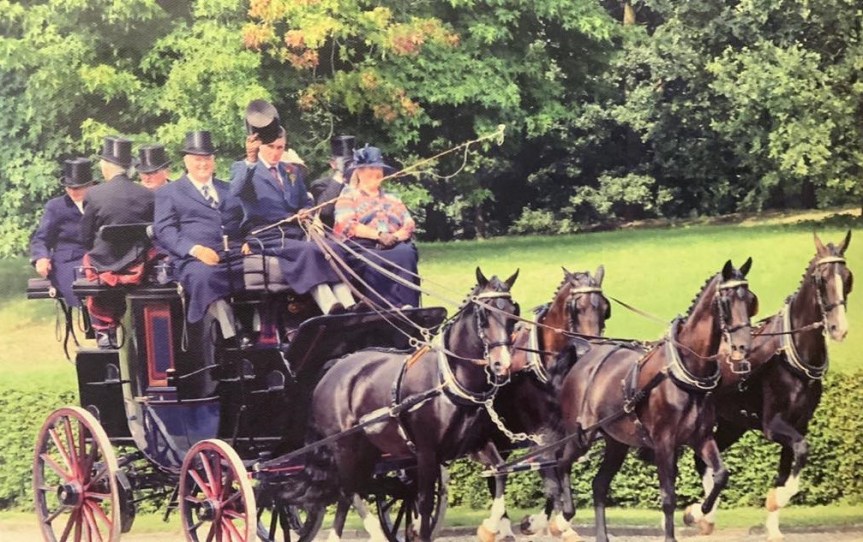
Tradition: this is one area where leather is the clear winner. BioThane does a good job imitating the look and feel of leather, but there’s just something about real leather that synthetic harness can’t match. The weight, the thickness, the polish, the smell of Kiwi and Brasso and leather, all combine to capture that true traditional look that so many drivers prefer. Particularly with an antique vehicle, authentic accessories like leather harness are practically a requirement, especially when being judged in the show ring!

In summary, there’s no “right” or “wrong” when choosing harness for your horse. BioThane offers a lot of advantages, especially for drivers just starting out or for use in daily training at home, but for pleasure driving traditionalists and for showing antique coaches, there’s just no substitute for real leather.
 Ranch Ride Carriage Drive LLC