

As promised, today we’re taking a closer look at cotton farming right here in Texas! Did you know that the US is the world’s third-largest cotton producer, and Texas is the largest cotton producer in the US?
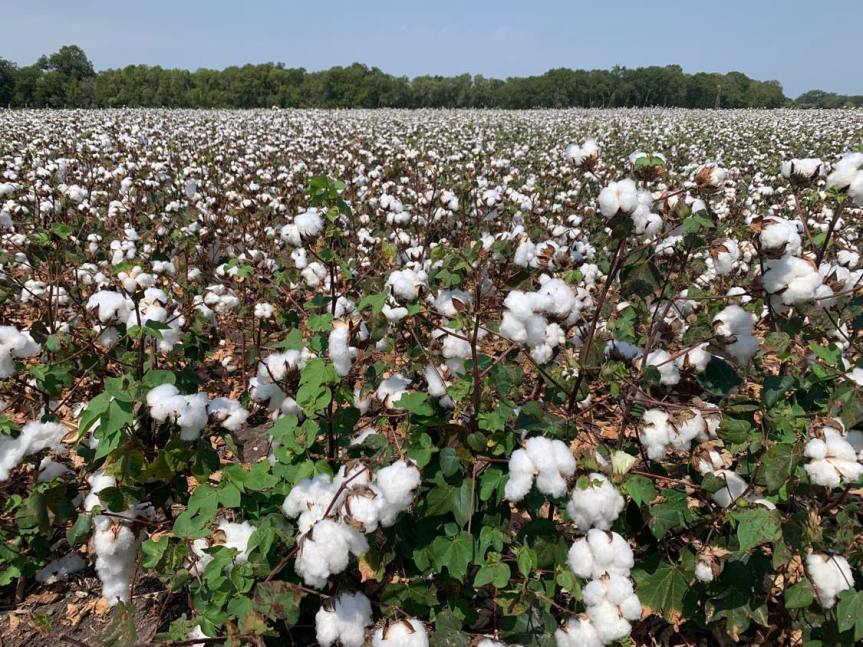
Wharton County, located in the Gulf Coast region of Texas, is known for its fertile soil and long history of cotton farming. Wharton county has some of the most productive cotton farms in Texas. This year (2023), the cotton crop has been relatively good, but the plants have not been as productive as other years due to ongoing drought. The plants didn’t grow as tall as normal, so they didn’t produce as many blooms this year. Blooms translate into cotton bolls, so fewer bolls mean less cotton production overall. Because of this, in some parts of the county the harvest was two to four weeks earlier than usual.
Here at the ranch, the cotton is harvested using John Deere cotton picking machines. These machines retail for just over $1,000,000 each.
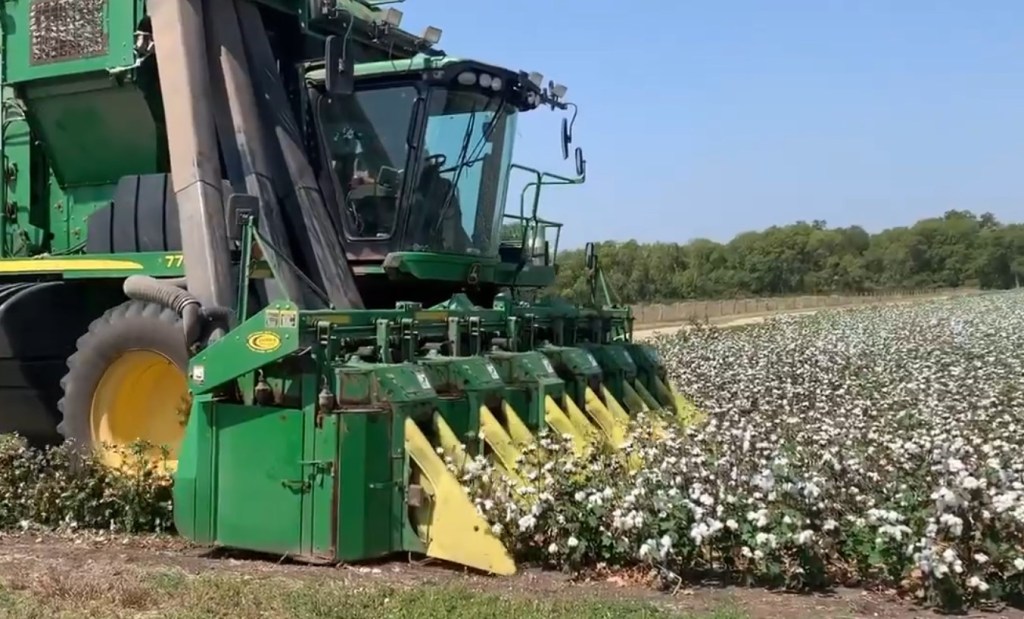

As the machine moves down the rows of cotton plants, thousands of spinning spindles pull the cotton from the plants, leaving behind the brown bract.
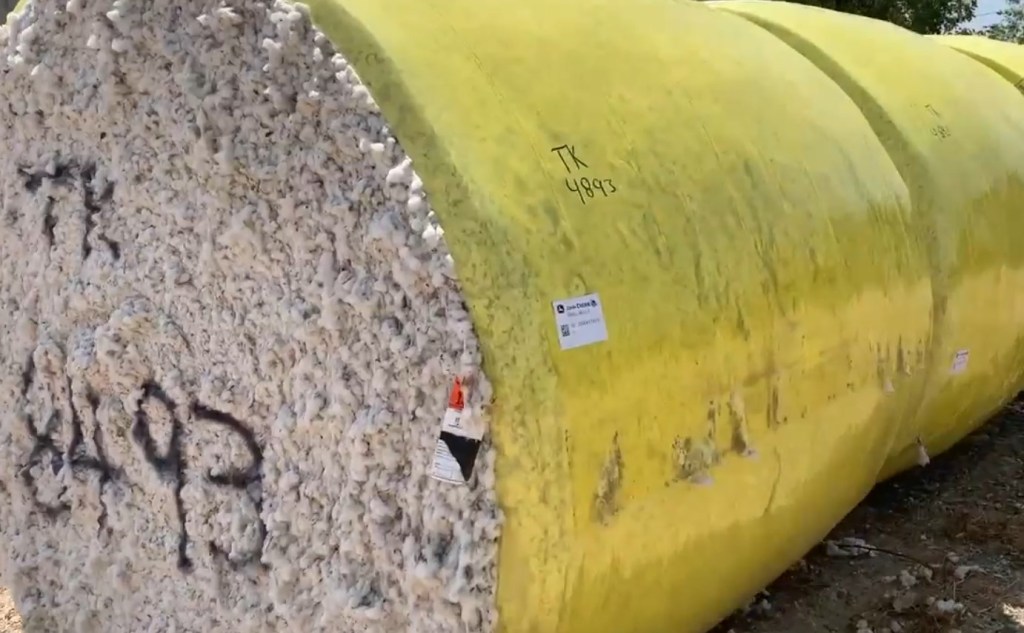
The cotton is compacted into a round bale (also called a “module”) inside the machine, then wrapped and dropped in the field for later collection. Each one of these round bales can weigh as much as 4,500 pounds and are 8 feet tall and 8 feet wide. The bales are marked with the producer’s ID and a serial number. Other types of harvesters produce large square bales (modules) weighing as much as 12,000 pounds.
Older conventional systems collect the cotton into a large basket which then must be transferred to a module-building machine by use of a “boll buggy” that shuttles the picked cotton out of the field. The newer machines eliminate the need for a shuttle vehicle or a separate module-building machine.
Even with improvements, the machines may still leave up to 10% of the cotton fiber on the plant. This is similar to the performance of other agricultural machines that harvest grain or other crops. Usually following the cotton picker is a flail mower to chop up the stalks. The stalks are then “disced under” into the soil, which enriches the soil and discourages pests.
The cotton picker is designed to leave as much debris as possible in the field, but some lint, dirt, and plant material will find its way into the machine. During harvest, the driver may need to clean the machine two or three times depending on how much debris it sucks in.

Debris, and of course seeds, also end up in the finished bales. This is why the next step in cotton production is to send the bales to cotton gins to separate the seeds and clean the cotton fiber. In pre-industrial times, seeds had to be painstakingly removed by hand, with each worker able to process up to about 5 pounds of cotton per day. Eli Whitney’s invention of the mechanical cotton engine, or “gin,” patented in 1794, enabled a worker to process up to 50 pounds per day. H. Ogden Holmes, a South Carolina mechanic, received a patent just two years later for improvements to Whitney’s gin.
Modern gins still use the same basic mechanical principles as these pioneering machines, but operate on a much larger scale. According to the Texas Cotton Ginners’ Association, “today, some of the ‘super gins’ located within the state can process upwards to 2,500 bales in a single 24-hour period!” That’s a long way from Eli Whitney’s original invention!
Cotton is used to make clothing, linens, and countless other items ranging from medical supplies to mattresses, ropes to coffee filters, diapers to dollar bills. Cotton plants also produce cottonseed oil, which is used for cooking, in lotions and cosmetics, and in cattle feed. Cotton is Texas’ largest crop, and the ranch plays its part in cultivating this important part of the global agricultural economy!
Learn more:
National Cotton Council of America
 Ranch Ride Carriage Drive LLC