

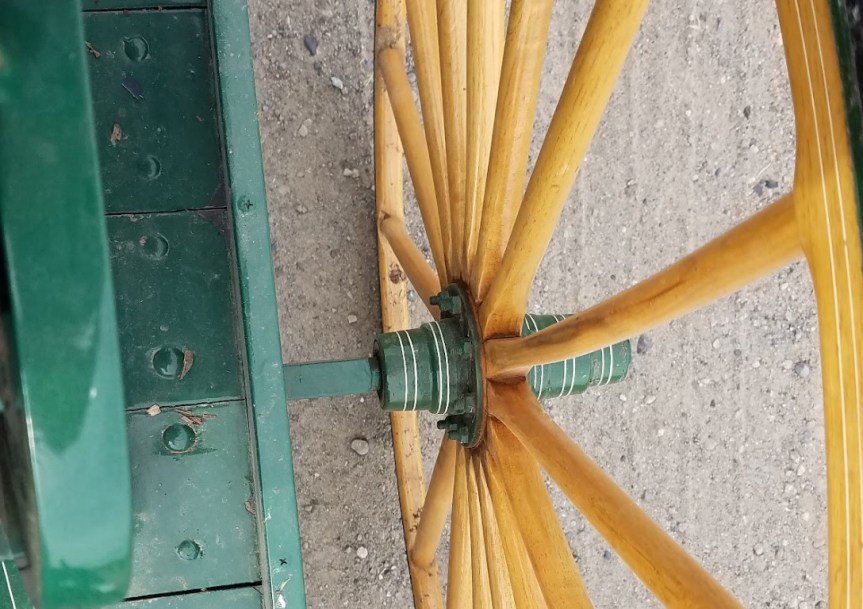
New drivers often ask when looking at carriages: Which should I choose? Four wheels, or two wheels?
I typically advise people that the answer depends on the size of your horse, and what you want to do with the carriage. Once I know more about your horse (or horses) and your intentions on the use of the carriage, we can narrow down the options appropriately.
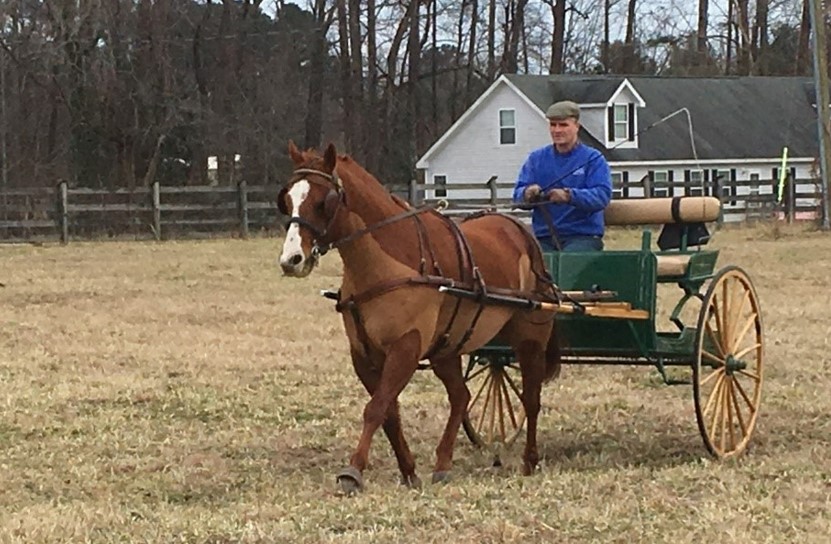
In my opinion, a two-wheeler, especially an antique one like the one in the below photos, will look nicer with a single horse. A four-wheeler with a single horse can sometimes look like it’s “all cart and no horse.” For a mini or very small pony, again just in my opinion, two wheels are definitely better.
Let’s look at some other basic considerations when choosing a vehicle:
Two-wheeled vehicles
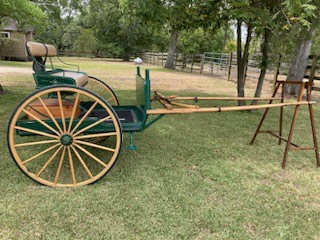
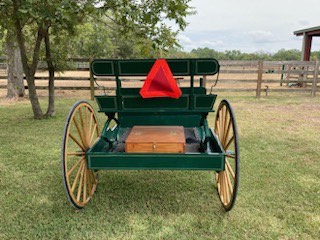
Price: Often cheaper to purchase because they are usually smaller, and the construction is simpler than a four-wheeler.
Turning: a two-wheeler is considered more maneuverable than a four-wheeler when hitched to your horse, especially when reversing your vehicle. There’s no argument that a two-wheeler is easier to position, as it simply follows the horse.
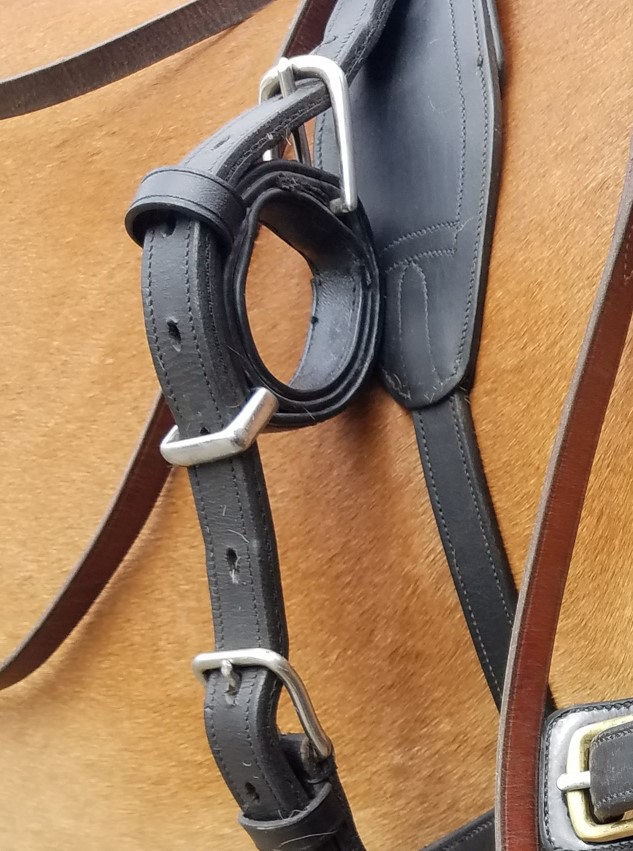
Balance: The shafts of a two wheeled carriage, when balanced correctly, shouldn’t put any significant pressure in the tugs (the harness loops in which the shafts rest – photo below). They should nearly float; you want no more than six pounds of weight on your horse’s back. The floor of your two-wheeler should be level and parallel to the ground.
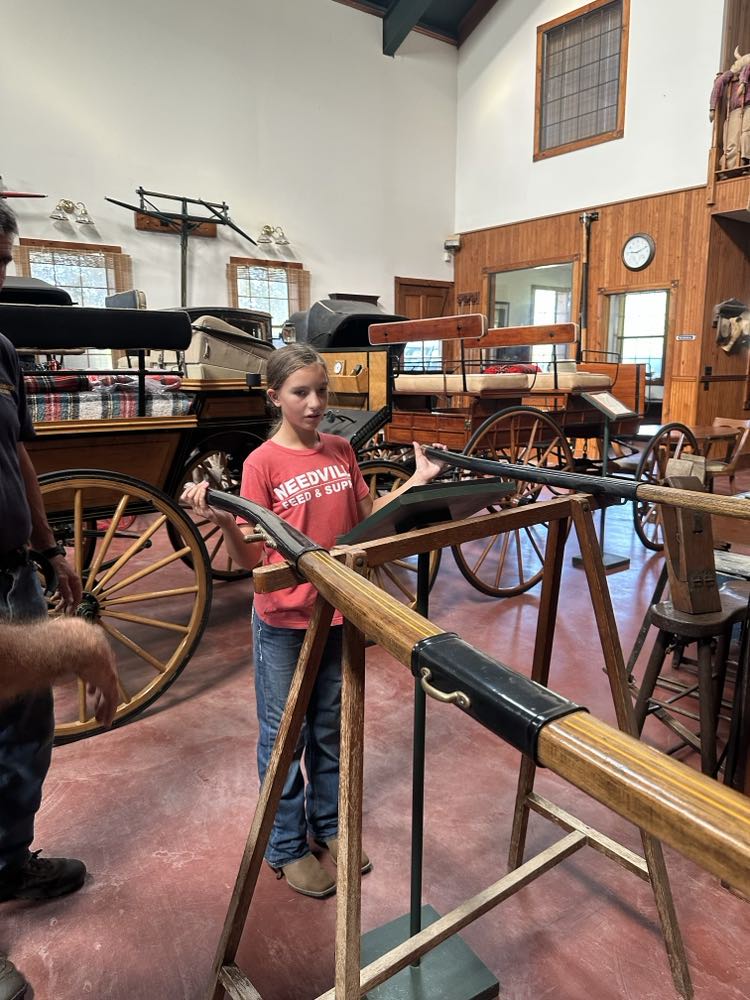
When balancing a two-wheeler, it’s important to practice. Have it loaded the way you intend to drive it, as any changes you make may affect the balance. Once loaded and hitched to the horse, you should have someone pick up the ends of the shafts. If it’s balanced correctly, they should be able to hold them with two fingers on each shaft. If not, then adjust the tugs up or down until balance is achieved. Another way to check the balance is if you and your passenger sit back, you should be able to very slightly lift the shafts; conversely, if you lean forward, you should see them dip slightly.
Four-wheeled vehicles
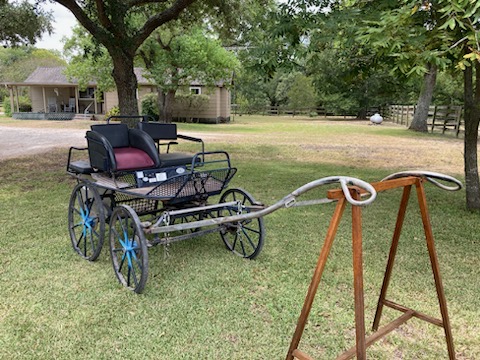
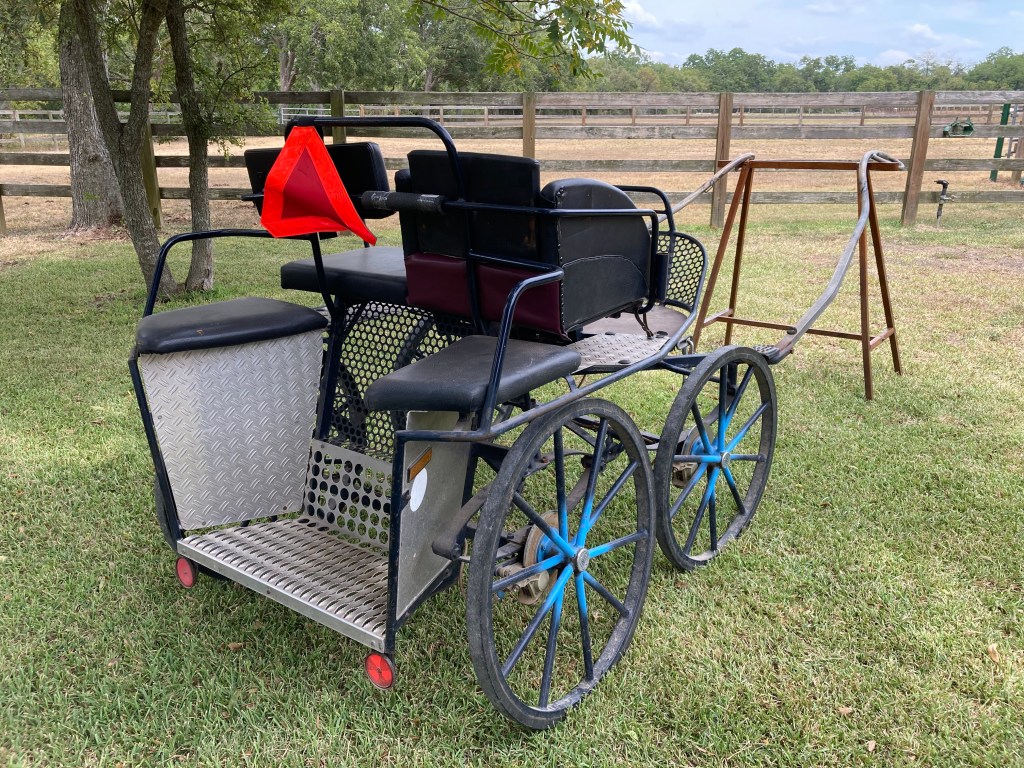
Price: generally more expensive, as they are usually larger, more spacious, and more complex in their construction than a two-wheeler.
Turning: A four-wheeler has a “fifth wheel” or turntable which gives it a point of articulation (see photo below). When turning in a tight space, this point of articulation can be extremely useful, assuming that you have a full cut under, i.e., the wheels pass under the body, allowing for a very tight turn radius. If the fifth wheel does not have a full cut under, as in the case of many antique vehicles like a surrey, your turning radius will be very large. When reversing in a four-wheeled vehicle, you should be able to move the carriage to the left or right.
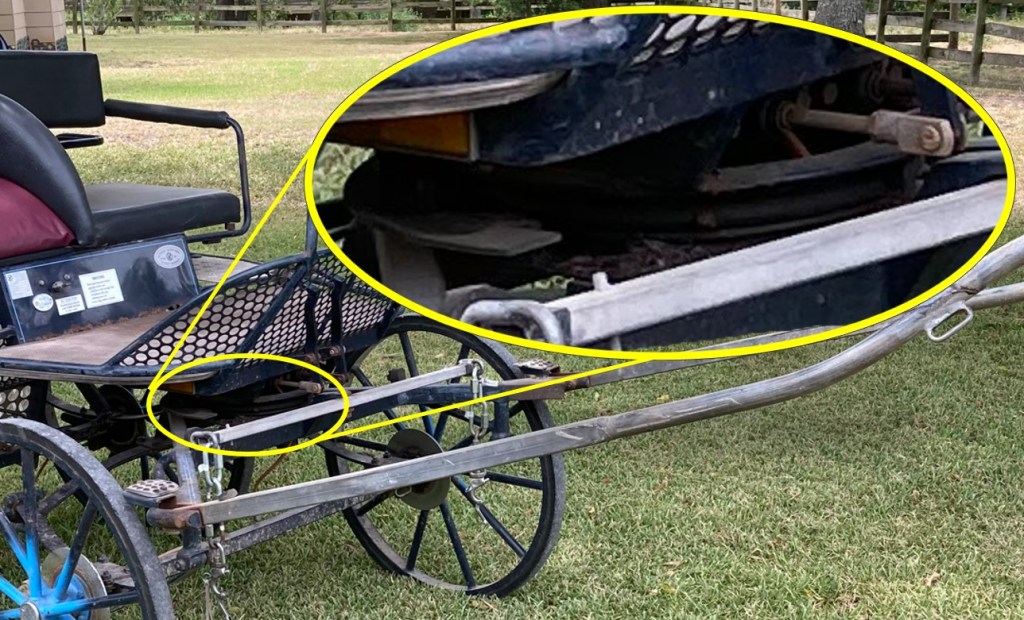
Balance: Four-wheeled vehicles may feel more stable due to the fact that they have a wheel on each corner, so you don’t feel the shafts flexing when entering the carriage. However, it is important to understand that four-wheeled vehicles are easier to tip over at speed, or when making extremely tight turns.
A four-wheeled vehicle places little to no weight on the horse’s back, but there is a larger co-efficient to drag as you now have four wheels in contact with the ground, thus requiring more effort from your horse to move the vehicle. Very generally speaking, a four-wheeled vehicle is designed to be pulled by either a single or a pair (or team).
There is a huge variety of horse-drawn vehicles out there, and a lot to choose from whether you are looking for two wheels or four! Just like any big purchase, take your time and shop around. Consider whether you might want an experienced driver – your instructor, or maybe someone at your driving club – to look the vehicle over before you buy it. Hopefully, your first carriage will bring you many happy years of enjoyment in the sport and art of driving!
 Ranch Ride Carriage Drive LLC