
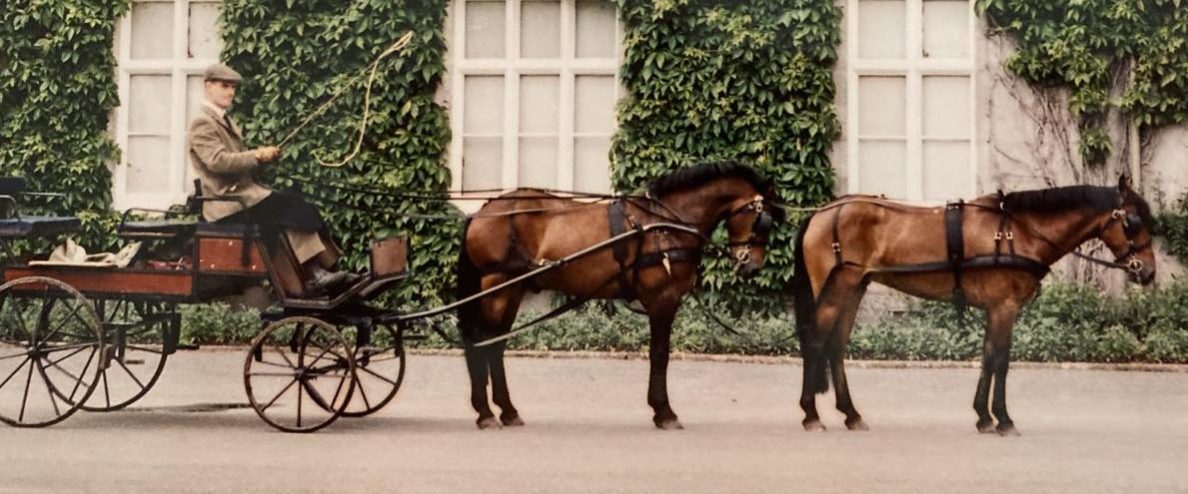
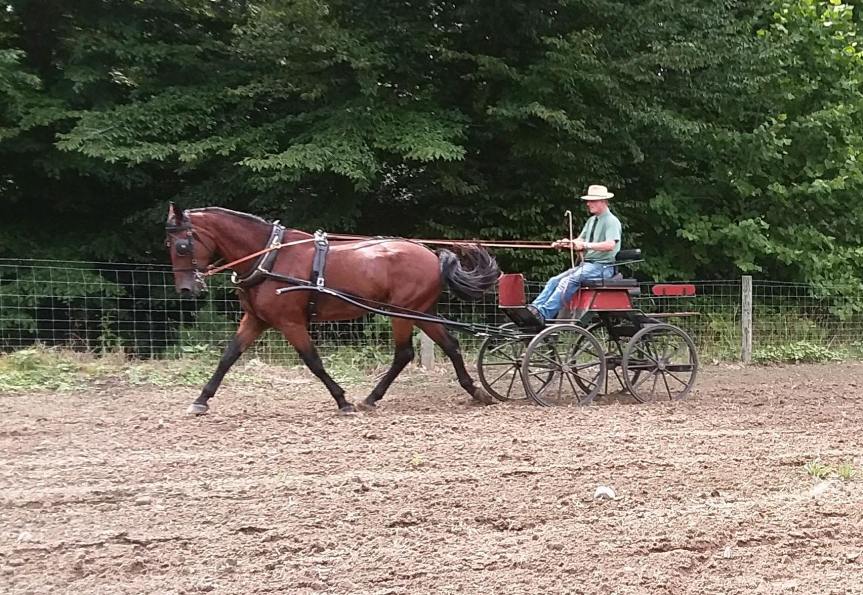
So you want to buy a carriage horse! There’s just nothing like the experience of driving in the open air, accompanied by the sounds of the carriage wheels, the horse’s hoofbeats, and the jingling of the harness. But how do you choose the right horse for your needs?
The first thing to think about is the job you want the horse to do. Will you be doing competitions, commercial work, pleasure driving, agricultural work, or just jogging around the farm with the kids? It’s easy to fall in love with almost very horse you look at, so keep your goal in mind as you are “shopping.” If you are new to this, it may help to write down the characteristics you are looking for in a driving horse.
Next, let’s talk about experience for both the driver and the horse. The old adage, “green on green” (a new driver with an inexperienced horse) is never a great match for success.
How much experience do you have as a driver? For safety’s sake, be honest with yourself. Driving can be a great way to have fun, but it can also be dangerous. Horses are not machines. They think for themselves – sometimes poorly, as many a driver has discovered to their chagrin. If you’re relatively new to driving, are learning a new driving technique, or are changing disciplines, you can gain experience by joining a driving club or taking lessons. You can also find a more experienced person to help you in selecting a horse and putting it to work.
The horse’s age and driving experience should also be considered. A younger horse won’t be a finished project, so you should be prepared to put some effort into improving their training. An older driving horse is more likely to have more solid training, as more life experience comes with age.
Now, let’s look at the overall qualities you want in any driving horse.
Responsiveness to voice commands and whip aids is key. When driving a horse, you are seated behind them, so you cannot use your leg aids to encourage them to go forward as you would when riding. A large amount of your communication with the horse will be via your voice and your whip, which replaces your leg aids.
Good conformation – in other words, how the horse is put together – is also important. Ideally a carriage horse should have a slightly more upright shoulder than a riding horse, as this makes it easier to fit a collar. The legs and body should be equal, i.e., depth of body should equal length of leg. Beyond these traits, you will want to consider the job the horse will be doing, and choose a breed to match its unique characteristics to the work. If you want a show horse with a high knee action, you want the head and neck to be carried higher to allow for the upward movement of the legs. This type of horse will likely be pulling a lighter vehicle. If you want a horse to pull a heavy plow, then having a lower head and neck gives the horse an advantage in pulling the weight.
What kind of climate will your horse be working in? Remember, in higher temperatures and higher humidity, a greater body mass will retain more heat and be more prone to overheating. A smaller, lighter body type will dissipate heat more easily.
Each breed of horse has its own unique characteristics. In an ideal world, you want the best conformation you can find, but like everything in life, there are trade-offs. Your goal is to make sure that in general, the horse is suitable for the job you want it to do.
Finally, I strongly encourage you to “try before you buy.” Watch the owner drive the horse first so you can assess its suitability. Whenever possible, try it out in the kind of environment that you’re going to use it in. For example, if you want to drive it out on the road, then watch the owner drive it on the road with traffic and see how the horse performs. Again, if you have very little experience, take an experienced friend along to give you a second opinion.
Driving is lots of fun when it’s done safely but when things go wrong, it can quickly turn dangerous. So take your time selecting the right horse for your needs, and above all, stay safe out there!
Fun Fact: There is a rule of thumb that will help you decide if the horse is going to be able to handle the weight you are asking it to move: that is, a horse can move 3 times its own body weight in a wheeled vehicle on the flat, 1.5 times its body weight as a dead weight on the ground, and its own body weight all day in the mountains.
 Ranch Ride Carriage Drive LLC